Orifice Plate Installation Guidelines

How to install an orifice plate?


1. How to install an orifice plate?


An orifice plate is a flow-restriction device that is used to measure the flow rate of a fluid in a pipeline. It is typically installed in a pipe by cutting a hole in the pipe and welding or bolting the orifice plate in place. The orifice plate has a sharp edge or "throat" that creates a restriction in the flow of the fluid. The pressure drop across the orifice plate is proportional to the flow rate, so by measuring the pressure drop, it is possible to determine the flow rate of the fluid.

In this article you will find basic orifice plate installation guidelines, including:

  • orifice plate tap orientation
  • orifice plate tapping locations
  • orifice tapping
  • etc…

This post is mainly a set of rules for the orifice plate installation like an orifice flow meter installation guidelines. In order that a flow instrument may accurately read flow, it's necessary that the installation comply with certain rules.

Follow the recommendations regarding elimination of flow disturbances, and the general layout and piping data.

2.Installing an Orifice Meter


There are a few key general considerations when installing an orifice plate:

  • Determine the location where the orifice plate will be installed. The orifice plate should be installed in a straight section of pipe, with no fittings, elbows, or other obstructions within a certain distance of the plate. This distance is known as the "pipe run" and is typically at least five pipe diameters upstream and downstream of the plate.
  • Clean the pipe thoroughly to remove any debris or contaminants that may interfere with the accuracy of the flow measurement.
  • Install the orifice plate in the pipe using bolts, clamps, or a flange. The orifice plate should be installed such that it is perpendicular to the flow of the fluid and the sharp edge or throat is facing directly into the flow.
  • The orifice plate should be installed at the appropriate elevation to ensure that the pressure taps are located at the correct heights.
  • It is important to properly seal the orifice plate to prevent leaks. This can be done with gaskets or by using a pipe flange with bolts and nuts to secure the orifice plate in place.
  • Install a differential pressure transmitter downstream of the orifice plate to measure the pressure drop across the plate. The pressure drop is used to calculate the flow rate through the orifice plate.
  • Calibrate the orifice plate and differential pressure transmitter according to the manufacturer's instructions. This typically involves flowing a known volume of fluid through the orifice plate and measuring the resulting pressure drop.

The section of the pipe in which the primary element is installed can be horizontal, inclined or vertical.
Orifice Plate Installation Guidelines

Orifice Plate Installation Guidelines

The direction of the flow is immaterial except when a foreign substance such as sediment or vapor is carried in suspension.

Orifice Plate Installation Detail

Orifice Plate Installation Detail

In this case it is preferable to install the primary element in vertical section of the line with the flow in such a direction that the foreign substance will readly carry on trough the primary element, i.e. upward in the case of vapor and downward in the case of sediment.

3.How does an Orifice Plate Work? What is an Orifice Plate?

Orifice Plate Installation Guidelines  How Orifice Plate Works?

How does Orifice Plate Work? (Video Thumbnail)

4.Flow Disturbances and Recommendations


The Orifice Meter must be installed in the proper orientation relative to the pipe and the fluid measured.

Pipe fittings and valves upstream from the primary element generate swirls and crosscurrents, which if uncorrected by a straightening vane may considerably upset the flow measurement. For accurate measurement the use of straightening vanes is usually imperative; however, if we are mainly concerned in the comparison of relative values or in control, vanes may be unnecessary.

Also, if the only source of disturbance is a single bend, ell, tee, or reducer preceding the orifice plate run, straightening vanes effect no improvement.

4.1 General Installation requirements:

  • The orifice meter must be installed between two mating flanges in the pipe.
  • For liquid metering, the pipe should run full at the measuring section.
  • The diameter of the tube must be circular over the measured length.
  • The internal surface of the measuring pipe must be clean and free of scale, pitting and deposits or any other possible source of turbulence.
  • The pipe and pipe flanges should be lagged for orifice plate steam applications.

The minimum recommended lengths for upstream and downstream for optimum accuracy are shown below. Shorter lengths can be used, although this will reduce the accuracy of the system.

Minimum Straight Run lengths for Orifice Runs and Other Flow Elements in Accordance with ISO 5167-2 Column B

Minimum Straight Run lengths for Orifice Runs and Other Flow Elements in Accordance with ISO 5167-2 Column B

4.2 Orifice Plate Installation Straight Run Requirement

To be able to have the required precision, it is necessary that our pipe has a previous straight run long enough to avoid disturbances in the fluid that will change in the flow profile that the orifice plate receives. It is possible to reduce the straight run length but it will surely affect the final accuracy of the orifice meter.

4.2.1 Straightening Vane IS NOT used

For the various types of upstream disturbances listed bellow, allow the recommended minimum distances of straight pipe between the disturbance and the upstream pressure tap.

  1. Flanges, collars, wide-open gates, reducers or bends, elbows or tees which are all in the same plane – 10 pipe diameters
  2. Angle turns in two planes – 50 pipe diameters
  3. Pressure regulator, control valve or similar apparatus or fitting – 75 pipe diameters
4.2.2. Straightening Vane IS used

If a straightening vane is employed, 10 pipe diameters of straight pipe preceding the upstream pressure tap and 5 following the downstream tap will be sufficient. The outlet face of the straightening vane should be located 6 or more pipe diameters upstream from the upstream pressure tap regardless of the type of pressure connections employed, but not closer than 4 pipe diameters to the nearest upstream disturbance.

Orifice Straight Run Requirement

Orifice Straight Run Requirement

4.2.3. Minimum Straight Run lengths for Orifice Runs and Other Flow Elements in Accordance with ISO 5167-2

To avoid disturbances in the flow lines and to be able to measure the pressure with the required precision similar to that made experimentally to obtain the coefficients applied in the calculation, all the elements that generate differential pressure require that the correct lengths are installed correctly before and after of the measuring element.

The necessary straight sections are based on the diameter ratio of the orifice plate (d) with respect to the inner diameter of the pipe (D). In this way, the lower the beta ratio, the lower the requirement for the length of straight sections. It is recommended, whenever possible, to use the length of straight sections as if the beta ratio were 0.7.

Recomended Straight Run Requierements according to ISO 5167-2

Recomended Straight Run Requierements according to ISO 5167-2

5.How to install orifice plate in pipeline?


5.1. Location of the connections in the pipe or flanges

In order to measure the differential pressure, it is necessary to connect the transmitter to the process through the connections available in the pipeline.

These connection lines are called impulse lines or differential pressure sockets. The design of these elements must be in accordance with the type of primary element and with the type of connections used in the calculation.

In most cases, the orifice plate with flange sockets is used.

In the orifice flange sockets, 2 valves called "root valves" are placed, which allow the impulse lines and the transmitter to be isolated from the main process line.

5.2.Horizontal Installation Guidelines

5.2.1. Horizontal Installation for Clean Fluids

With an horizontal line, the pressure connections should be made at the SIDE of the line to allow trapped vapors to escape from the connection lines, and to prevent sediment from entering in these lines.

In this way, the pressure taps are always full of liquid and balanced, just as the instrument will only measure the differential pressure corresponding to the flow rate.

The following instructions apply for the layout of the orifice plate and transmitter when liquid flow is to be measured:

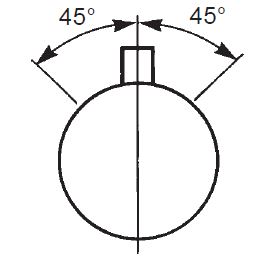
  • The pressure tappings should be horizontal or up to 45° below the horizontal.

Position of Pressure Tappings for Liquid Measurement

Position of Pressure Tappings for Liquid Measurement

  • They must never be taken off from directly below the orifice plate as any dirt from the pipeline may fall into the impulse piping and either block it or cause a serious error in the transmitter reading.
  • The two impulse pipes should follow the same route, preferably clipped together.

Horizontal Installation for Clean Fluids

Horizontal Installation for Clean Fluids

  • The transmitter should be installed at a lower position than the orifice plate.

Horizontal Installation for Clean Fluids

Horizontal Installation for Clean Fluids

Horizontal Installation for Clean Fluids

Horizontal Installation for Clean Fluids

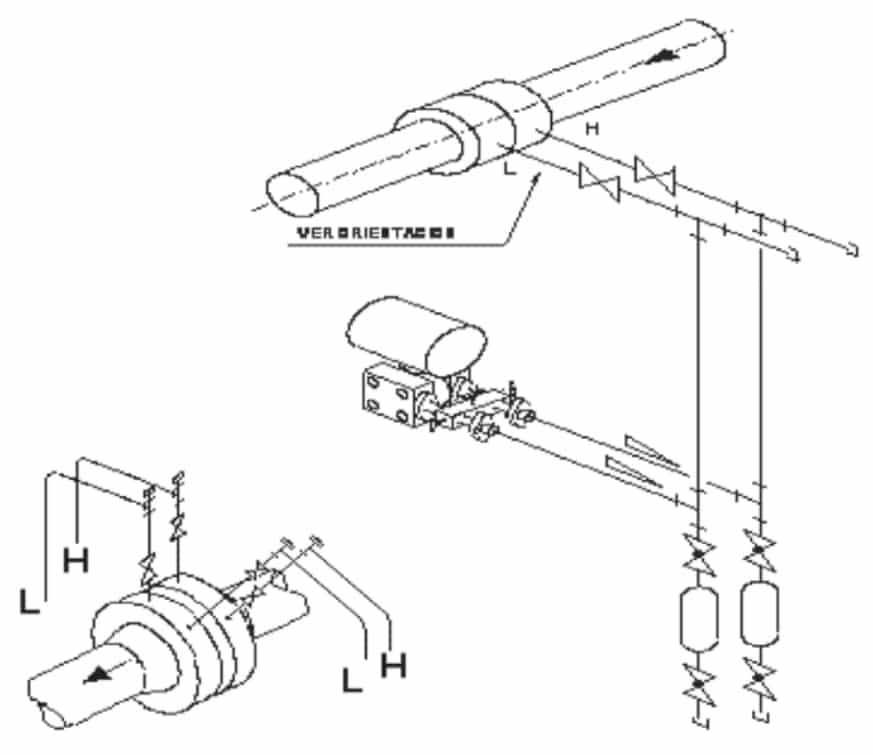
The upper drawing shows two types of remote assemblies that allow the instrument to be placed in an accessible area free of vibrations.

The lines must always have an upward slope of more than 10%, to facilitate the venting of any gas that may be in the chambers of the transmitter or in the lines.

5.2.2. Horizontal Installation for dirty or corrosive Fluids using a seal

If liquid being measured must not come in contact with transmitter, 3/8 inch tubing and transmitter body must be filled with suitable seal liquid. The 2 filling tees must be at same elevation.

Horizontal Installation for dirty or corrosive Fluids using a seal

Horizontal Installation for dirty or corrosive Fluids using a seal

5.2.3. Horizontal Installation for clean non-condensable gas

The following instructions apply for the layout of the orifice plate and transmitter when gas flows are being measured.

The assembly of the transmitters above the process line and with slope in fall from the transmitter to the orifice plate, guarantees that no stopper will be formed in the lines since the slope will facilitate drainage, allowing moisture to drain out and not fill the impulse piping.

The position of the pressure tappings shall be vertical or within 45° of the vertical:

Pressure tappings

Pressure tappings

The Pressure Transmitter should be installed at a higher position than the orifice plate.

The two impulse pipes should follow the same route, preferably clipped together

Horizontal Installation for clean noncondensable gas

Horizontal Installation for clean noncondensable gas

Vertical Installation for clean noncondensable gas

Vertical Installation for clean noncondensable gas

When for different reasons the instrument can not be mounted above the orifice plate, or when the gas may have condensable or liquid entrainments, an assembly will be made as the upper drawing.

The connections of the orifice plate will be conducted upwards, as shown in the diagram.

Condensate collection pots will be installed in both lines. The instrument will be placed higher than the connection to the vertical impulse lines, and connections between the process and the pots will have a small gradient to facilitate any liquid draining into the pots.

The valves on the pots will be open in normal service. Any liquid that enters or condenses in the impulse lines will drain into the pots.

This assembly will prevent the formation of liquid columns in the impulse lines and the instrument will measure correctly for long periods of time. The pots should be checked and drained periodically to prevent the accumulation of fluid.

5.2.4. Horizontal Installation for vapor or dirty or condensable gases

The following instructions apply for the layout of the orifice plate and transmitter when steam flow is being measured. The connections from the orifice plate can be made with connection in horizontal, vertical or 45 degrees upwards. In all cases, the two connections (high and low pressure), must be connected at the same level, so that the liquid columns in both chambers of the transmitter have the same height, and can be canceled with each other.

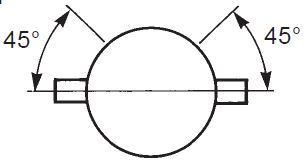
Position of Pressure Tappings for Steam Applications

Position of Pressure Tappings for Steam Applications

  • The position of the pressure tappings shall be horizontal or up to 45° above the horizontal.
  • The DP Transmitter should be installed at a lower position than the orifice plate.
  • The impulse lines should be filled with condensed water to prevent damage to the transmitter.
  • Temperature at the measuring cell should be less than 100°C.
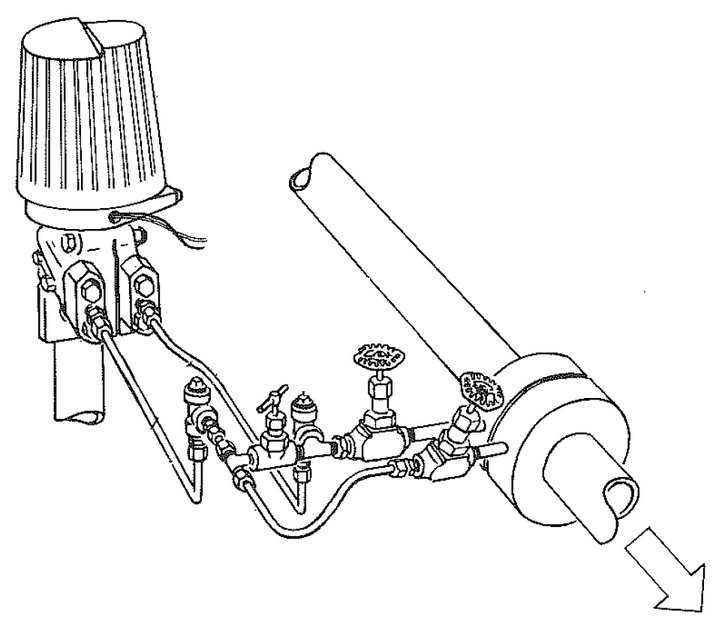
Horizontal Installation for vapor or dirty or consensable gases

Horizontal Installation for vapor or dirty or consensable gases

In the measurement of steam flow, the instrumentation must be installed below the differential pressure element and at a distance sufficient to allow condensation and cooling of the steam.
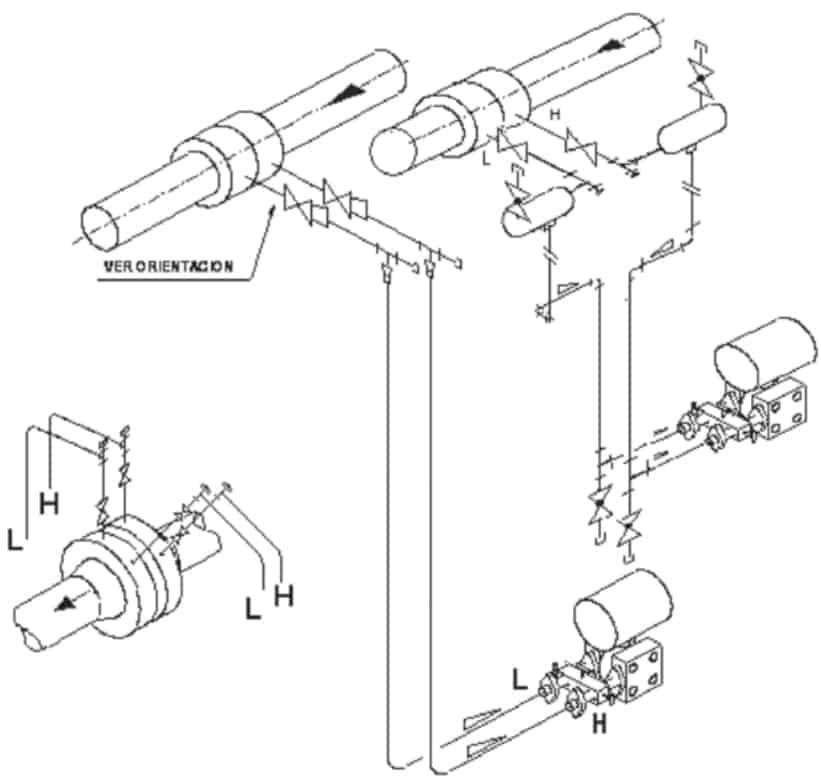
Horizontal Image of Orifice Plate Installation

Horizontal Image of Orifice Plate Installation

Due to the high temperature of the steam, which can cause damage to the equipment or to the electronics of the instrument, condensate columns/pots should be installed between the instrument and the steam that goes through the pipe.

Can we install orifice plate in vertical line? Yesss

If the orifice plate can not be installed in a horizontal process pipe, we must follow the following recommendations.

5.3.Vertical Installation Guidelines

Depending on the orifice plate installation direction the impulse piping should be set up as shown below:

In the case of having an ascending fluid, the impulse piping must be configured as shown below. The difference in the static head pressure can be compensated using the zero adjustment on the pressure transmitter.
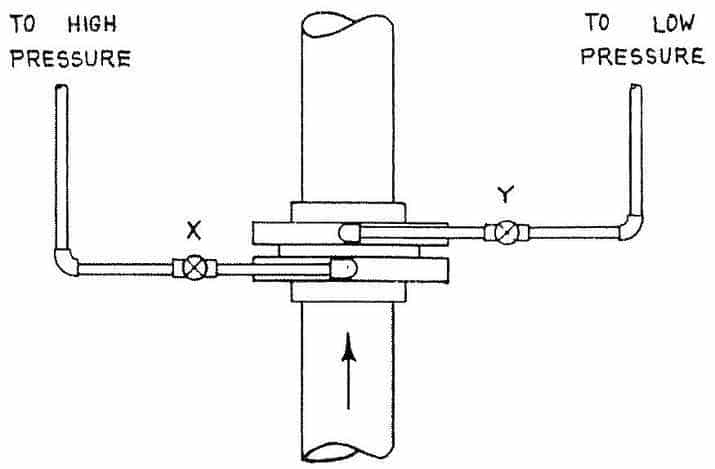
Orifice plate flange taps orientation fluid going up

Orifice plate flange taps orientation fluid going up

In the case of having a descending fluid, the impulse piping must be configured as shown below. The difference in the static head pressure can be compensated using the zero adjustment on the pressure transmitter.
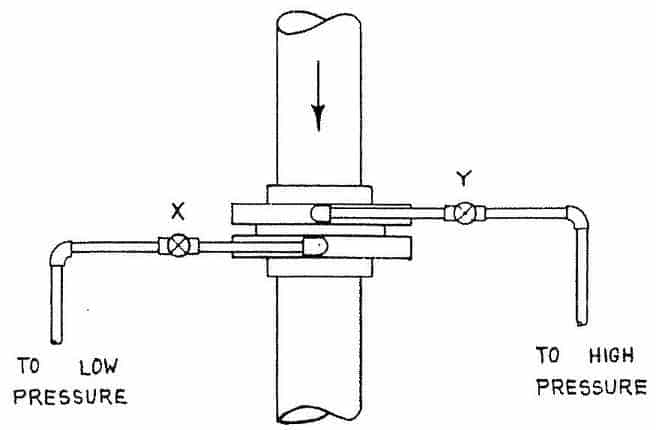
Orifice plate flange taps orientation fluid going down

Orifice plate flange taps orientation fluid going down

5.3.1. Vertical installation for clean liquids

Vertical installation for clean liquids

Vertical installation for clean liquids

5.3.2. Vertical installation for dirty or corrosive liquids

Mount the transmitter LOWER than the pressure connections.

Vertical installation for dirty or corrosive liquids

Vertical installation for dirty or corrosive liquids

5.3.3. Vertical installation for clean non-condesable gases
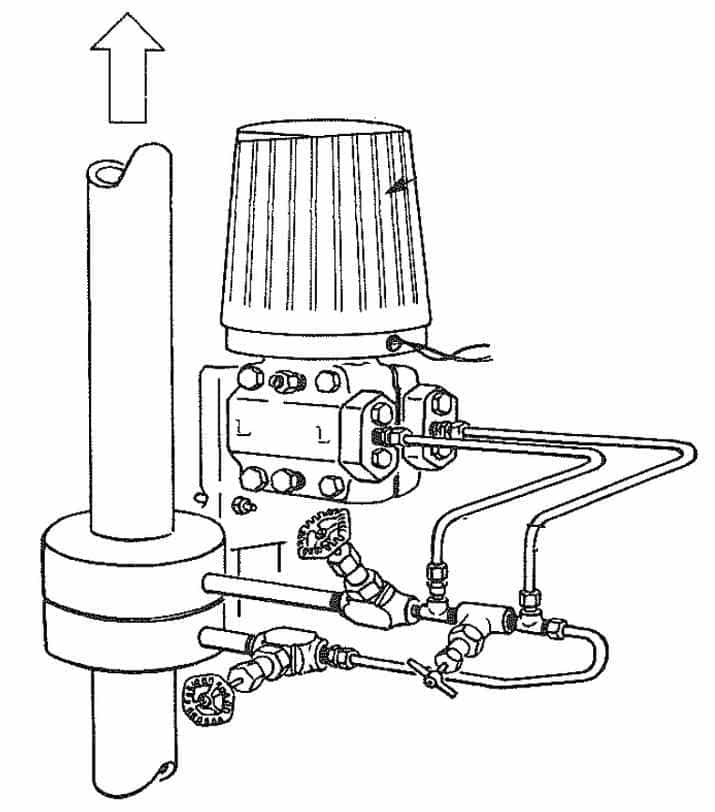
Vertical installation for clean noncondesable gases

Vertical installation for clean noncondesable gases

5.3.4. Vertical installation for vapor condensable gases or dirty gases

Vertical installation for vapor condensable gases or dirty gases

Vertical installation for vapor condensable gases or dirty gases

6. Length of connection lines to the process


In general, the circulating fluids through the process pipes should not be carried through the instrument connection lines to control rooms, interconnection rooms, local panels or any room that may be closed or partially closed.

As a general rule the instruments should be mounted as close as possible to the impulse intakes and in areas with high ventilation.
The shorter the lengths of the lines, the less possibility of leakage, plugging and higher speed in the response of the transmitter to variations in the differential pressure. The possibilities of error decrease with short lines.

On the other hand, long lines require greater support, take up more space, require more materials and have a higher risk of leakage. However, the good location and accessibility of the instruments in accessible ground or platforms is one of the fundamental factors for the execution of a good maintenance. The savings in stairs, scaffolding, hours of execution of the works and the increase of the safety, compensate in a short time the extra initial cost of this type of assembly.

Download our free PDF file about this article!

  • Instrumentation and Control.net
  • Rating: 4.5689 - 798 reviews
We have prepared this complete PDF so that you have all the information we give in this article and you can share it, discuss it with your colleagues, and use it professionally. Having the content in PDF format allows you to access it offline, print it easily, and keep it well-organized for future reference.
We consider that it is better to have a well-formatted text that includes all the key concepts explained in this publication, ready to share or save for later use. A PDF ensures that the layout remains intact across different devices and makes it easier to annotate or highlight important points.

Information and Definitions


Beveled Edge Orientation
Beveled edge orientation refers to the correct positioning of the orifice plate’s tapered edge, which must always face downstream to ensure proper flow contraction and pressure drop formation. This orientation is critical for creating the expected flow profile through the orifice, which the differential pressure measurement relies upon for accurate flow calculations. Installing the plate in reverse can significantly distort readings, resulting in incorrect flow data and reduced efficiency. Most plates include markings or flow direction arrows to guide proper installation and prevent measurement errors.

Centering of Orifice Plate
Centering of the orifice plate ensures that the plate is aligned with the centerline of the pipeline to allow symmetrical flow and prevent measurement distortions. Misalignment can lead to flow disturbances, increased turbulence, and inconsistent pressure drops, all of which negatively affect the accuracy of flow rate calculations. Proper centering is achieved using centering devices, flange guides, or machining tolerances, and must be verified during installation. It is particularly important in systems requiring high measurement accuracy, such as custody transfer applications in gas or fluid pipelines.

Edge Condition
Edge condition refers to the physical state of the orifice plate’s bore edge, which must remain sharp and clean to maintain reliable and repeatable flow measurements. Damage such as burrs, nicks, erosion, or corrosion can alter the flow characteristics and lead to incorrect pressure differential readings. Regular inspection and maintenance are necessary to ensure the edge remains within standard tolerances, especially in systems dealing with abrasive or corrosive fluids. A worn or damaged edge compromises the fundamental principle of differential pressure-based flow measurement and must be addressed immediately.

Flow Direction
Flow direction indicates the orientation in which fluid moves through the piping system and must align with the designated direction of the orifice plate. Most plates are designed to function with a specific inlet and outlet side to produce an accurate differential pressure reading. Installing the plate against the marked flow direction, particularly in plates with beveled or eccentric bores, disrupts the expected flow profile and leads to inaccurate measurement. Clearly marked flow arrows on the plate or flange help technicians maintain the correct direction during installation.

Gasket Compatibility
Gasket compatibility involves selecting sealing materials that match both the orifice plate and pipeline specifications to prevent leaks and maintain alignment. The gasket material must withstand the process temperature, pressure, and chemical properties of the fluid. An incorrect gasket can lead to leaks, misalignment of the orifice plate, or compression issues that affect the edge profile and pressure tap access. Proper gasket selection contributes to system integrity, ensures accurate readings, and prolongs the life of both the orifice plate and the connected pipeline equipment.

Installation Orientation
Installation orientation describes the position and alignment of the orifice plate in relation to the pipe, including its horizontal or vertical setup and the placement of pressure taps. This orientation must consider the fluid phase (gas, liquid, or steam) to avoid issues like gas pockets in liquid lines or liquid pooling in gas lines. In vertical installations, orientation must ensure proper drainage or venting. Incorrect orientation can cause errors in pressure readings due to accumulation or separation of phases, leading to inaccurate flow measurements and potential damage.

Material Selection
Material selection refers to the process of choosing suitable construction materials for the orifice plate based on the fluid’s chemical properties, temperature, and pressure. Common materials include stainless steel, Monel, and Hastelloy, chosen for their corrosion resistance and mechanical strength. Using the wrong material can result in plate degradation, pitting, or cracking under operating conditions, leading to measurement errors and system downtime. Selecting a compatible material helps maintain plate integrity, ensures safe operation, and supports compliance with industry standards in demanding environments like chemical or oil processing.

Pressure Tap Location
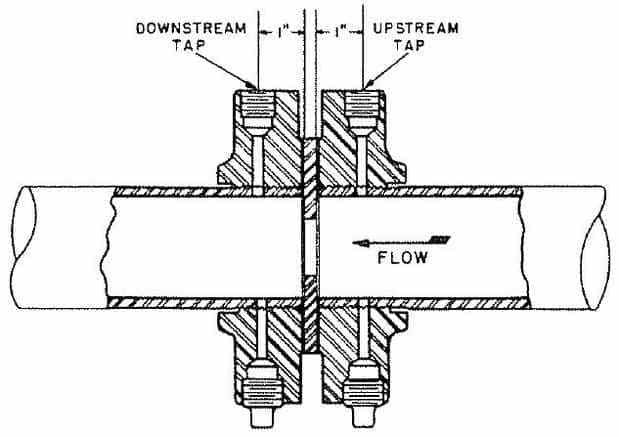
Pressure tap location defines the specific points upstream and downstream of the orifice plate where pressure is measured to calculate flow rate. These locations vary depending on the tapping method used, such as flange taps, corner taps, or vena contracta taps, each with prescribed distances from the orifice. Proper tap placement ensures that the differential pressure reflects the actual flow behavior around the orifice. Incorrect placement can lead to distorted readings due to flow disturbances or pressure recovery, significantly compromising measurement reliability in flow monitoring systems.

Straight Pipe Requirements
Straight pipe requirements refer to the minimum lengths of unobstructed pipe upstream and downstream of an orifice plate needed to achieve a fully developed flow profile. These lengths help eliminate flow disturbances caused by valves, elbows, or reducers and ensure that the pressure drop across the orifice is measured under stable conditions. The recommended straight lengths depend on the piping configuration and can be reduced with flow conditioners. Failure to meet these requirements can introduce swirl or asymmetrical flow, reducing measurement accuracy and increasing uncertainty in critical processes.

Temperature and Pressure Effects
Temperature and pressure effects describe how variations in process conditions influence the performance of an orifice plate, affecting material behavior, fluid properties, and measurement accuracy. Elevated temperatures can cause thermal expansion of the orifice plate, altering the bore diameter, while pressure affects fluid density and compressibility. These changes must be compensated for in flow calculations to maintain precision. Using flow computers or correction factors ensures that dynamic process changes are properly accounted for. Ignoring these effects can lead to significant errors, especially in high-pressure or high-temperature applications.

Orifice plate installation guidelines References

1 Orifice Plate Installation Drawings from Foxboro Co.

2 BRISTOL BABCOCK (1989) Flowmeter Applications

3 SPIRAX SARCO (1997) M410 Orifice Plate Assemblies

4 EMERSON (2014) Rosemount 1495 Orifice Plate, 1496 Orifice Flange Union.

5 Rosemount-2011-Installation-and-Flowmeter-Orientation.pdf

6 I.Fernández de la Calle (2013) Sistemas Instrumentados de Seguridad y Análisis SIL.

Another calculators or articles that may interest you


Frequently Asked Questions

Q1 Are straight pipe lengths necessary before and after an orifice plate?

A1 Yes, straight pipe lengths are essential both upstream and downstream of an orifice plate to ensure accurate flow measurement. These straight runs help eliminate turbulence and flow disturbances that can affect pressure differential readings. The length of straight pipe required depends on the piping configuration, flow profile, and the presence of fittings such as elbows or valves. Typically, 10 to 20 pipe diameters upstream and 4 to 8 downstream are recommended. Installing flow conditioners can also help achieve a fully developed flow profile if sufficient straight runs are not possible due to space limitations.

Q2 Can an orifice plate be installed in vertical piping?

A2 Yes, an orifice plate can be installed in vertical piping, but care must be taken to ensure correct orientation and flow direction. When installing in a vertical run, the direction of flow and the orientation of pressure taps must be considered to avoid gas or liquid entrapment in the tapping points. For gas flow, upward flow is usually preferred, while for liquids, downward flow helps avoid bubble formation. Proper drainage and venting should be ensured, especially if the process fluid can accumulate or cause measurement inaccuracies due to gravitational effects.

Q3 Do temperature and pressure conditions affect orifice plate performance?

A3 Yes, temperature and pressure conditions have a significant impact on orifice plate performance and accuracy. High temperatures can cause thermal expansion of the orifice plate, affecting the bore diameter and therefore the flow calculations. Pressure influences the density and compressibility of the fluid, which must be considered in the flow equations. It is important to use appropriate material specifications and compensation techniques for temperature and pressure variations. In some cases, flow computers or correction factors are used to adjust for these changing conditions and maintain accurate flow measurement.

Q4 How are orifice plates centered in the pipeline?

A4 Orifice plates must be properly centered within the pipe to ensure accurate differential pressure measurements. Misalignment can lead to flow asymmetry and incorrect readings. Centering is typically achieved using centering rings or specific markings on the flange to align the plate during installation. In the case of orifice flanges, the use of dowel pins or jacking screws helps position the plate correctly. Proper gasket selection and uniform bolt tightening during assembly also contribute to maintaining the alignment and sealing of the orifice plate.

Q5 How do flow direction and orifice plate orientation affect accuracy?

A5 Flow direction and orifice plate orientation are critical for accurate measurement. Orifice plates usually have a beveled edge on one side, and it must face downstream to create the proper flow constriction. Incorrect orientation can result in inaccurate differential pressure and therefore incorrect flow calculations. Plates are often marked with an arrow or label to indicate the correct installation direction. Some plates also have tap holes for pressure measurement that must align with the tapping points on the pipe to ensure consistent and reliable readings.

Q6 Is orifice plate edge condition important for measurement accuracy?

A6 Yes, the edge condition of the orifice plate is vital for maintaining accuracy. The edge should be sharp and free of burrs, nicks, or corrosion. A damaged or worn edge can distort the flow profile and affect the pressure drop across the plate, leading to inaccurate flow readings. Regular inspection and maintenance are recommended to verify the integrity of the orifice edge. Plates may need to be replaced or re-machined if wear or damage is detected. The plate edge should comply with relevant standards such as ISO 5167 or ASME MFC guidelines.

Q7 What are the common types of pressure taps used with orifice plates?

A7 The most common types of pressure taps used with orifice plates include flange taps, corner taps, radius taps, and vena contracta taps. Flange taps are located one inch upstream and downstream of the orifice plate and are widely used due to ease of installation. Corner taps are placed directly at the face of the orifice plate. Radius and vena contracta taps are positioned based on specific distances from the plate and are used for more precise applications. The choice of tapping depends on standards, accuracy requirements, and process conditions.

Q8 What materials are commonly used for orifice plates?

A8 Orifice plates are made from a variety of materials depending on the process fluid, temperature, and pressure conditions. Common materials include stainless steel, carbon steel, Monel, and Hastelloy. For corrosive environments, exotic alloys or plated plates may be used to prevent degradation. The selected material must maintain structural integrity and dimensional stability under operating conditions. It is also important to match the plate material with the piping material to avoid galvanic corrosion. Material certification and traceability are often required in regulated industries like oil and gas or pharmaceuticals.

Q9 What precautions should be taken during orifice plate maintenance?

A9 During maintenance, ensure the system is depressurized and isolated to prevent leaks or injury. Carefully remove the orifice plate to avoid damaging the edge or surface. Inspect for erosion, corrosion, deposits, or wear that can impact performance. Clean the plate gently using suitable solvents or tools to avoid scratching. Check gasket surfaces and replace gaskets if necessary. Verify the correct orientation and alignment before reinstalling. Document any findings or replacements for future reference and compliance. Regular maintenance schedules help preserve measurement accuracy and system safety.

Q10 Where should pressure taps be located for accurate measurement?

A10 Pressure taps should be positioned in accordance with standardized distances from the orifice plate to ensure accurate differential pressure readings. The most common configuration is flange taps, located one pipe diameter upstream and one-half pipe diameter downstream. These positions minimize error due to flow turbulence or profile distortion. Tap location should also consider the direction of fluid flow and avoid positions where bubbles or sediments might accumulate. Using the correct tap configuration is essential for flow calculations based on ISO 5167 or ASME MFC standards.