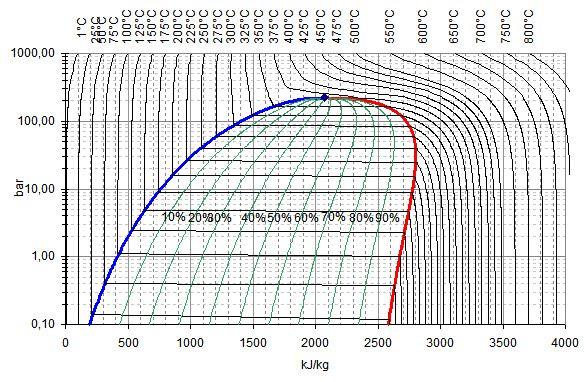
Pv is the vapor pressure at the listed temperature. Pc is the critical pressure of the pure fluid. Both are absolute pressures.
The reference pressure column shows the pressure used for density and kinematic viscosity. For other operating conditions, evaluate these properties at the actual temperature and pressure.
| Fluid | Temperature (°C) | Pv (bar abs) | Pc (bar abs) | Density (kg/m³) | Kinematic viscosity (cSt) | Reference pressure |
|---|
Related Resources






Frequently Asked Questions
Are Pv and Pc gauge or absolute pressures?
Both are in bar absolute. Use the same absolute pressure basis when comparing Pv with valve inlet and outlet pressures.
Can I use the tabulated density and viscosity at a higher pressure?
The listed values apply at the reference pressure, either Pv or the higher of 1 atm and Pv. For a different operating pressure, evaluate density and viscosity at the operating temperature and pressure.
Can I use this table for a mixture such as gasoline or a water–glycol solution?
Use property data for the actual mixture and composition. The table describes pure fluids, and a mixture’s phase behavior and viscosity depend on its composition.
Why is the vapor pressure relevant to a control valve?
Vapor can form when local pressure inside the valve drops below Pv. If the pressure subsequently recovers above Pv, the vapor bubbles can collapse and cause cavitation. If outlet pressure stays below Pv, vapor can persist downstream as flashing.