Pressure and Temperature Flow Compensation Formula and equations

What is pressure compensation? Why temperature compensation is required?


1. Pressure and Temperature Flow Compensation Formula and equations

1.1. What is pressure compensation? Why temperature compensation is required?

This article allows us to understand what is the relationship between the flow measurement, the pressure and the temperature of a fluid. This article shows how the flow measurement is compensated when we have a flow measurement that does not automatically compensate for differences in fluid pressure and temperature. If you are interested in making a hole plate calculation you can visit our calculator pages to make the calculation and download the result in a spreadsheet.


2. Contents

  1. What is Flow Compensation?
    1.1. Formula for pressure
  2. Obtaining the Real Density Formula
  3. Deriving the Differential Pressure Flow Equation
  4. Pressure Temperature Compensation Formula (steam or gas flow compensation formula)
  5. References

3. What is Flow Compensation?

3.1. Why do you do process temperature and pressure flow compensation?

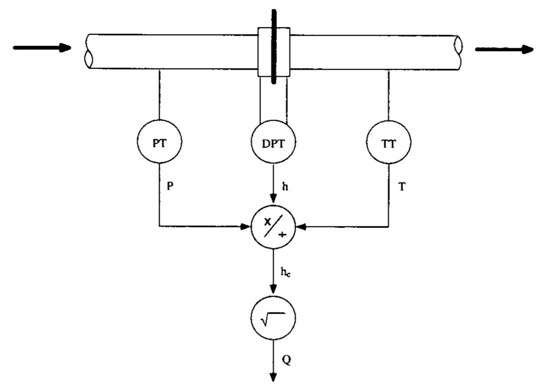
In steam or gas flow measurement, the density of the steam or gas changes as pressure and temperature change. This change in density can affect the accuracy of the measured flow rate if it is uncompensated. Temperature, pressure compensated flow control is a flow modified mathematically by one or more additional variables, like:

  • Temperature
  • Pressure
  • Density
  • Viscosity

Producing a resultant value for flow compensation that is more accurate. It is compensated for the error effects of the other variables.


3.2. Formula for pressure

This post is related with how to compensate flow with pressure and temperature. If you are looking for the Pressure Formula click here!

Why do you do process temperature and pressure flow compensation?


4. Pressure Temperature Compensation Flow Measurement Formula

Orifice meters require Pressure Temperature Compensation Formula when we use them to measure steam or gas flow in pipes with variable operating pressure and temperature. Normally we do not have an online density measurement. In this case we will consider the density constant to simplify the calculations. If you want to perform a density compensation in the flow measurement you must take into account the density variation.
Selection Criteria

Selection Criteria

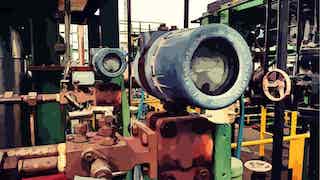
The variations in pressure and temperature have a significant effect on steam or gas density, this is why without this pressure and temperature compensation the flow measurement can have large errors.

This post will help you to understand the basics concepts around this formulas (flow compensation formula) and will also let you implement them on your process control system.
Selection Criteria

Selection Criteria


5. Obtaining the Real Density Formula

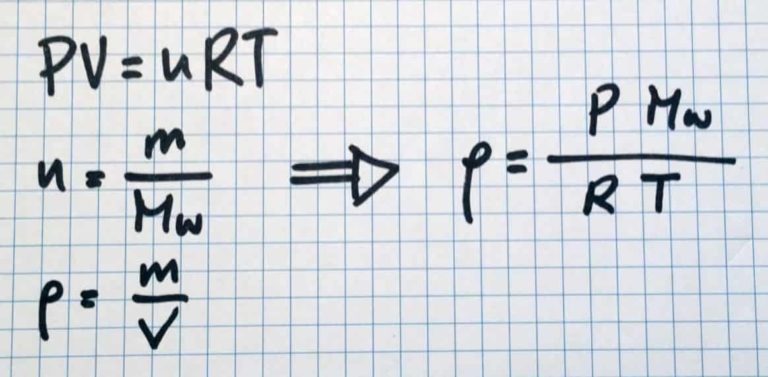
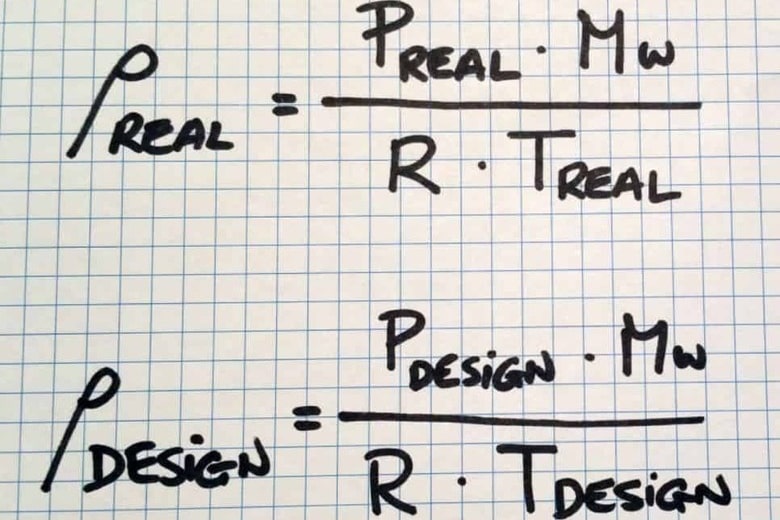
Starting with the ideal gas law, we can extract density from the formula and calculate the density for two different situations (design and real). We need to apply a density compensation in flow measurement.
Selection Criteria

Selection Criteria

where:

  • P = Pressure
  • T = Temperature
  • V = Volume
  • Mw = Molecular Weight
  • n = Number of mols
  • R = Gas constant
  • rho = steam or gas density

After simplifying the previous equation we can have different results depending on the different situations, so we can have a set of design conditions and also a set of real situation conditions.
Selection Criteria

Selection Criteria

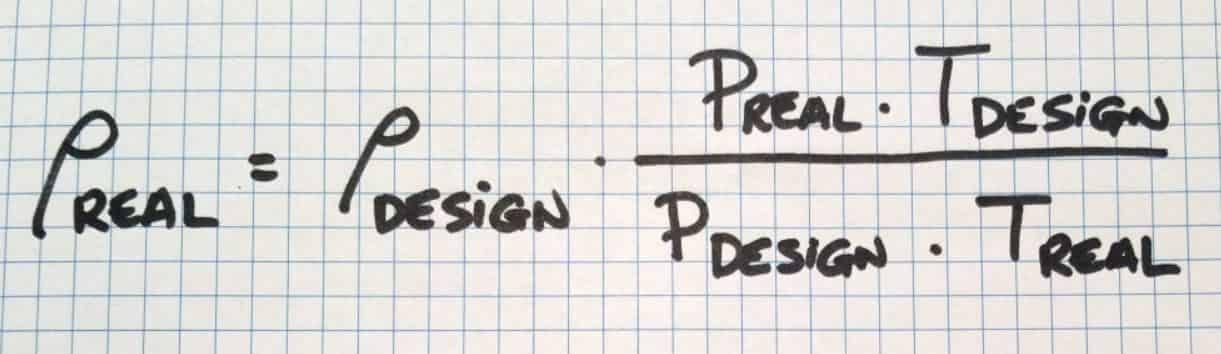
Operating with the formulas for real density formula and design density we can obtain the formula to define the real density taking into account the pressure and temperature compensation.
Selection Criteria

Selection Criteria


6. Deriving the Differential Pressure Flow Equation

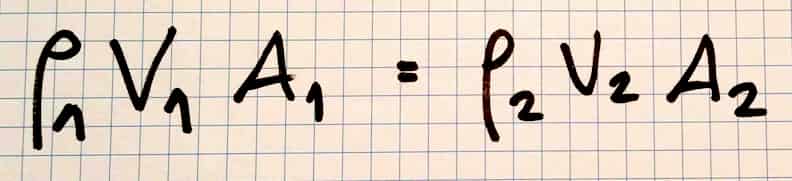
To obtain the Differential Pressure Flow equation we will use two basic fluid mechanics equations: Eulers equation of continuity and Bernoullis principle.
Selection Criteria

Selection Criteria

Where:

  • V = linear velocity of fluid
  • rho = steam or gas density
  • A = Area

And:

Selection Criteria

Selection Criteria

Where:

  • P = Pressure
  • rho = steam or gas density
  • V = linear velocity of fluid
  • g = standard gravity
  • h = height

Rearranging the previous equation and assuming constant density and h1=h2 we have ....

Selection Criteria

Selection Criteria

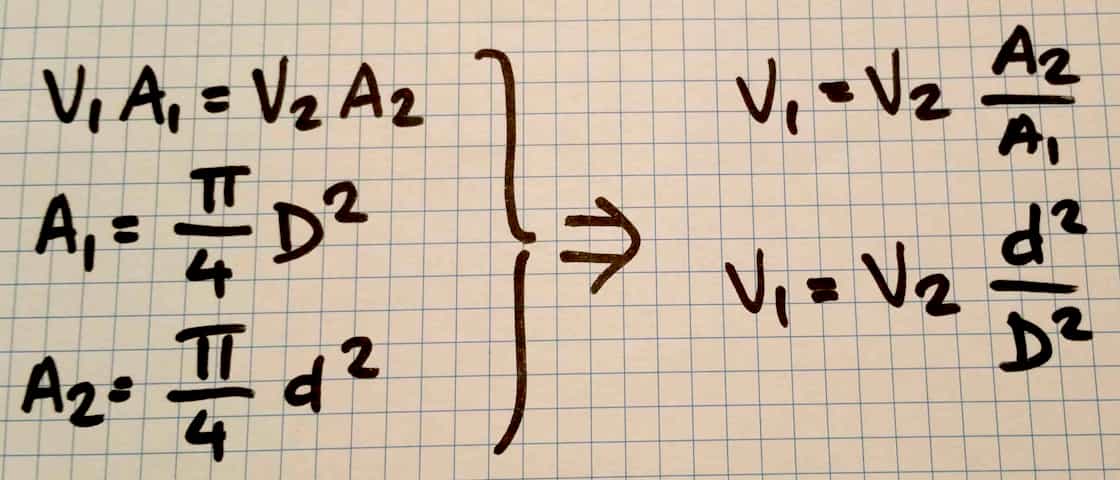
Now its time to express fluids velocity in function of pipe diameter (D) and orifice (d) plate restriction diameter:
Selection Criteria

Selection Criteria

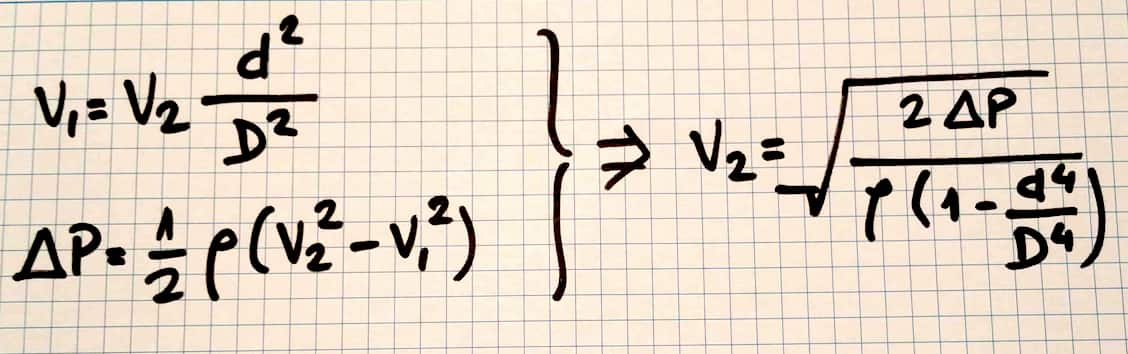
and after that, we can substitute V1 inside the previous equation, the resulting equation gives us the velocity at the restriction:
Selection Criteria

Selection Criteria

To calculate the volumetric flow we have to multiply both sides by the area of the restriction:
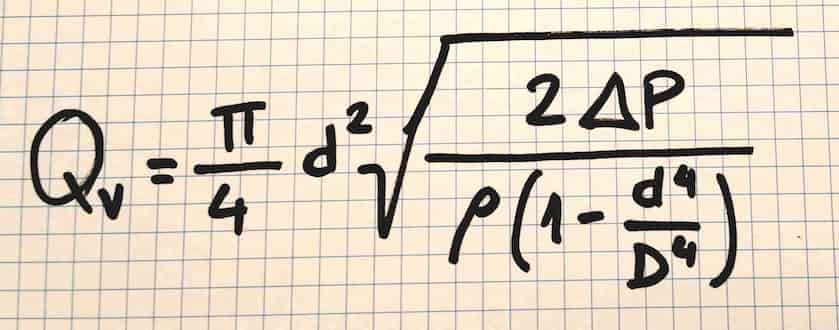
Selection Criteria

Selection Criteria

If we concentrate all the constants in just constant called K we have the following expressions referring to QV and QM:
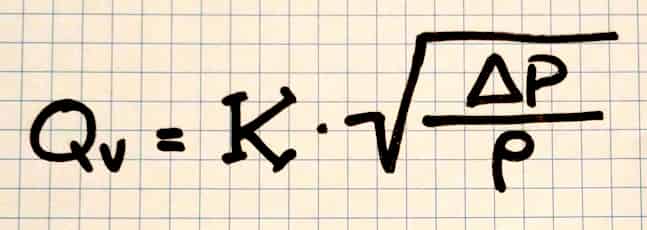
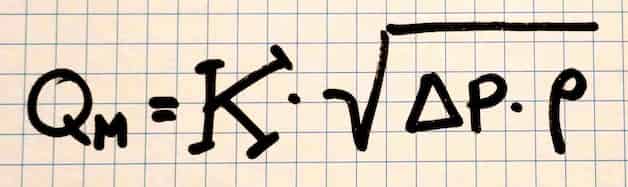
Selection Criteria

Selection Criteria

Selection Criteria

Selection Criteria


7. Pressure Temperature Compensation Formula (steam or gas flow compensation formula)

7.1. How does pressure compensated flow control work?

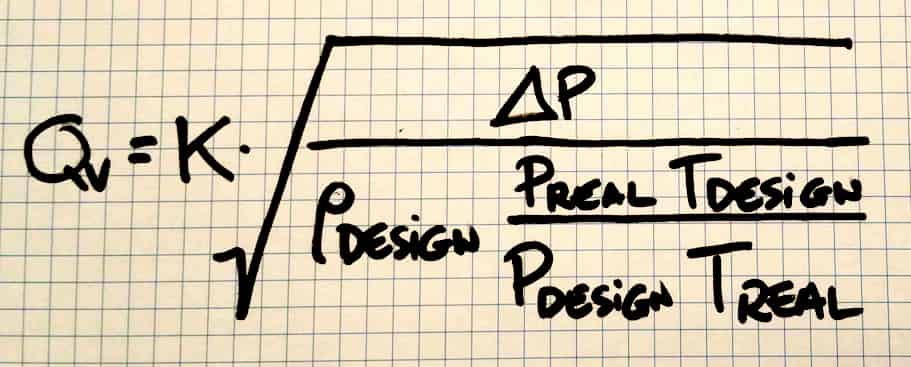
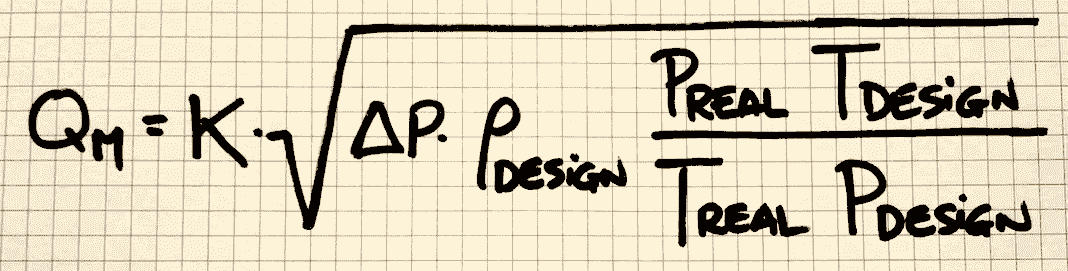
Now its time to substitute the real density by the density calculated in point 2.
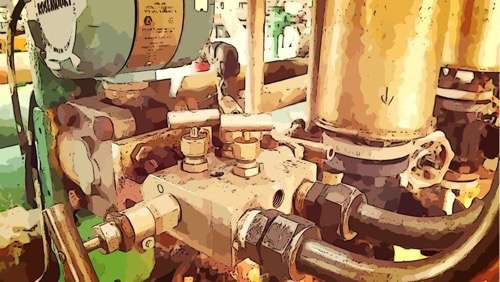
Selection Criteria

Selection Criteria

After the substitution we will have the following formulas which are used to calculate the compensated flow for every orifice plate flowmeter (depending if you need volume or mass flow).
Selection Criteria

Selection Criteria

Selection Criteria

Selection Criteria

Remember that you must use the flow square root extraction formula in your DCS!!!

Download our free PDF file about this article!

  • Instrumentation and Control.net
  • Rating: 4.5300 - 968 reviews
We have prepared this complete PDF so that you have all the information we give in this article and you can share it, discuss it with your colleagues, and use it professionally. Having the content in PDF format allows you to access it offline, print it easily, and keep it well-organized for future reference.
We consider that it is better to have a well-formatted text that includes all the key concepts explained in this publication, ready to share or save for later use. A PDF ensures that the layout remains intact across different devices and makes it easier to annotate or highlight important points.

Information and Definitions


Compressibility Factor
Compressibility factor is a dimensionless quantity used to adjust gas flow calculations by accounting for deviations from ideal gas behavior under varying pressure and temperature conditions. It corrects the flow equation to reflect real gas properties and is crucial when operating at high pressures or temperatures where ideal gas assumptions no longer hold. The factor is typically determined using equations of state or empirical charts and is essential for achieving accurate compensated flow rates in gas measurement systems. Ignoring it can lead to significant discrepancies in flow metering results.

Density Compensation
Density compensation involves adjusting flow measurements based on changes in fluid density due to variations in temperature and pressure. Since flow rate is directly influenced by density, especially in gases, accurate compensation ensures the volumetric or mass flow is correctly reported under actual operating conditions. This is commonly done using formulas that integrate measured pressure and temperature data with known fluid properties. Accurate density compensation is critical in custody transfer, energy metering, and any application where fluid conditions fluctuate and precision is vital.

Expansion Factor (Y)
The expansion factor accounts for the compressibility effects of gases as they pass through a differential pressure device like an orifice plate, causing a drop in pressure and resulting in gas expansion. This factor adjusts the basic flow equation to more accurately represent the mass flow rate by compensating for this density change. It is especially relevant in high-pressure or compressible gas applications and varies depending on the pressure ratio across the orifice. Ignoring the expansion factor can result in underestimating or overestimating the actual flow.

Gas Flow Compensation Equation
The gas flow compensation equation combines pressure, temperature, compressibility, and differential pressure to determine accurate gas flow rates under varying operating conditions. A typical form includes terms for actual pressure and temperature, standard reference conditions, compressibility factor, and expansion factor. This equation ensures that measured flow is corrected to standard conditions, enabling fair comparison, reporting, and billing. It is widely used in the oil, gas, and utilities industries where accurate metering of gas under fluctuating conditions is required for operational and contractual reliability.

Ideal Gas Law Application
The ideal gas law is often used as a foundational model in temperature and pressure compensation formulas, relating pressure, volume, and temperature to gas behavior. In flow measurement, it helps convert between actual and standard volumetric flow rates when real gas behavior is close to ideal. Although less accurate at extreme conditions, it provides a straightforward method for initial estimations and is frequently used in conjunction with correction factors like compressibility. It forms the conceptual base for many compensation approaches in gas metering systems.

Mass Flow Rate
Mass flow rate is the quantity of mass passing through a flow meter per unit time and is often the final objective of compensated flow measurements. It is calculated using a combination of pressure, temperature, density, and differential pressure data. In gas applications, mass flow is more stable and meaningful than volumetric flow, which varies with pressure and temperature. By incorporating compensation formulas, systems can report accurate mass flow regardless of process fluctuations, which is essential in chemical processing, energy billing, and performance monitoring.

Pressure Compensation
Pressure compensation refers to the correction applied to flow measurements to account for deviations in process pressure from standard or base conditions. This correction is necessary because gas density and flow behavior change with pressure, affecting volumetric flow readings. Pressure sensors and compensation algorithms are used together to normalize the measurements and provide accurate mass or standard volume flow rates. It is particularly important in systems dealing with compressible fluids and plays a key role in ensuring accurate metering in dynamic operating environments.

Standard Conditions
Standard conditions are predefined reference states for pressure and temperature used to compare and report flow volumes across different processes and industries. Common standards include 101.325 kPa and 0°C or 15°C, depending on regional or regulatory guidelines. Flow rates are often converted to standard conditions to eliminate the effects of pressure and temperature fluctuations, enabling fair comparisons and accurate billing. Compensation formulas incorporate these values to normalize readings, and they must be consistently defined and documented to ensure clarity and regulatory compliance.

Temperature Compensation
Temperature compensation corrects flow measurements for changes in temperature that affect fluid density and volume. As temperature increases, gases expand and become less dense, which would lead to incorrect flow readings if uncorrected. Compensation is typically achieved through temperature sensors and integration into flow equations, allowing conversion to standard temperature-based flow rates. Accurate temperature compensation is crucial for maintaining measurement integrity in heating systems, natural gas pipelines, and other thermal-sensitive applications where real-time accuracy is needed for operations or billing.

Volumetric Flow Correction
Volumetric flow correction involves converting the actual measured volume of fluid passing through a meter to a volume under standardized pressure and temperature conditions. This is essential because fluid volume changes with pressure and temperature, especially in gases. Correction formulas take into account measured operating conditions and adjust the flow to what it would be under standard conditions. This allows for consistent reporting, comparison, and usage tracking. Volumetric correction is widely used in natural gas distribution, HVAC systems, and other industries dealing with compressible fluids.

Pressure and Temperature Flow Compensation Formula References


1 EMERSON (2015) Theory of dP Flow

2 MOORE Products (1994) Pressure and temperature compensations of an orifice meter using the model 352 single loop controller

3 Wikipedia.org

4 EMERSON Rosemount Differential Pressure Flow Gas Flow Measurement

5 ISA Maintenance of Instruments & Systems, Second Edition Lawrence D. Goettsche

Another calculators or articles that may interest you ...


1 How to convert actual flow to normal flow? Difference between Actual, Standard and Normal Flows explains the conversion between these important concepts.

2 Orifice Plate Installation Guidelines provides best practices and rules for proper installation of orifice plates.

3 If you need to calculate the flow rate flowing through an Orifice Plate: Orifice Plate Calculator - Flow Rate

4 Orifice Plate Calculator - Pressure Drop helps you calculate pressure loss across orifice plates. 5 Orifice Plate Calculator - Size to determine the correct orifice diameter for your application.

6 Learn more about fundamental concepts in Introduction to Instrumentation.

7 P&ID Diagram Basics shows how pressure instruments are represented in process diagrams.

Frequently Asked Questions


Q1 How are flow compensation formulas applied in practice?

A1 Flow compensation formulas are applied to adjust the measured flow rate of gases or fluids to a standard or reference condition. In practice, sensors measure actual temperature and pressure, and the flow compensation formula is used to correct the data accordingly. This allows engineers to compare flows from different systems or locations with varying environmental conditions. Accurate compensation ensures proper system sizing, efficient operation, and adherence to regulatory standards. It is widely used in fields such as HVAC, gas distribution, and chemical processing, where consistent and reliable flow data is essential.

Q2 How does temperature influence flow rate in compensation calculations?

A2 Temperature affects the density of gases and fluids, and therefore it influences the volumetric flow rate. When temperature increases, gases expand and their density decreases, which can result in a lower mass flow rate. Conversely, lower temperatures increase density and potentially the mass flow. In flow compensation calculations, the actual temperature is compared with a reference temperature to adjust the flow rate accordingly. This correction ensures that changes in temperature do not skew the flow measurement, making it possible to standardize data regardless of thermal variations in the system.

Q3 Is there a difference between temperature and pressure compensation?

A3 Yes, temperature and pressure compensation address different aspects of flow measurement. Temperature compensation adjusts for the effect of heat on fluid or gas density, while pressure compensation adjusts for changes in compression. Together, they ensure the accuracy of flow measurements when actual operating conditions differ from standard or normal conditions. In practice, both are often applied simultaneously using combined formulas to obtain a corrected flow rate. Each parameter plays a unique role in maintaining consistent flow data under variable environmental or system pressures and temperatures.

Q4 What are the common reference conditions used in compensation formulas?

A4 Common reference conditions for flow compensation are 0 degrees Celsius and 1 atmosphere of pressure for standard conditions, and 20 degrees Celsius with 1 atmosphere for normal conditions. These baselines allow for consistent and comparable flow measurements across different systems and industries. Compensation formulas use these reference values to normalize actual flow data. It is important to use the correct reference condition as specified by industry standards or contractual agreements to ensure accurate reporting and data interpretation.

Q5 What equipment is required for pressure and temperature flow compensation?

A5 To perform accurate flow compensation, the system requires several pieces of equipment: a flow meter, a pressure sensor, and a temperature sensor. These devices work together to measure the actual conditions of the fluid or gas. The data collected is processed using compensation formulas to adjust the flow reading. In many modern systems, flow computers or digital transmitters are used to automatically apply these corrections in real time. This ensures high accuracy and reduces the chance of human error in manual calculations.

Q6 What is the basic formula for pressure and temperature flow compensation?

A6 The basic formula for pressure and temperature flow compensation adjusts the actual flow to standard or normal conditions using the ideal gas law principle. The compensated flow is calculated by multiplying the actual flow by the ratio of actual pressure to standard pressure, and standard temperature to actual temperature. This formula accounts for the variation in density due to changes in temperature and pressure. While this is a simplified version, more complex systems may use extended versions that consider compressibility or non-ideal behavior of gases.

Q7 What is the role of the ideal gas law in flow compensation?

A7 The ideal gas law plays a central role in flow compensation, providing the theoretical basis for adjusting flow rates according to changes in pressure and temperature. It states that the volume of a gas is directly proportional to its temperature and inversely proportional to its pressure. By using this relationship, engineers can derive compensation formulas that correct the actual flow measurements to a standard or normal condition. Although real gases may deviate from ideal behavior, the ideal gas law provides a useful starting point for many practical applications.

Q8 When should engineers use pressure and temperature compensation?

A8 Engineers should use pressure and temperature compensation whenever the measured flow occurs under conditions that differ from standard or reference values. This is especially important in processes involving gases, where changes in temperature or pressure significantly affect volume and density. Compensation is also critical in industries where precision is essential, such as pharmaceutical manufacturing, natural gas distribution, and environmental monitoring. Applying compensation ensures that flow data remains accurate, allowing engineers to make sound operational and design decisions.

Q9 Why is flow compensation important in gas measurement systems?

A9 Flow compensation is crucial in gas measurement systems because gases are highly sensitive to changes in pressure and temperature. Without compensation, flow readings would vary unpredictably with environmental or system conditions, leading to inaccurate data and potentially costly decisions. Compensation enables consistent, comparable, and reliable flow measurements regardless of operational fluctuations. It ensures proper billing, regulatory compliance, and system performance, particularly in large-scale applications such as utility metering, fuel injection systems, and industrial gas processes.

Q10 Will flow compensation improve system efficiency?

A10 Yes, flow compensation can significantly improve system efficiency by ensuring accurate flow data, which is critical for proper system control and optimization. By correcting for temperature and pressure variations, operators can make better-informed decisions, such as adjusting flow rates, managing loads, or identifying inefficiencies. Accurate flow measurements also support predictive maintenance and help avoid overdesign or underperformance of equipment. In the long term, flow compensation leads to reduced energy consumption, lower operational costs, and more reliable system performance.
