Temperature Measurement


1. Temperature Measurement

1.1. Technical Characteristics
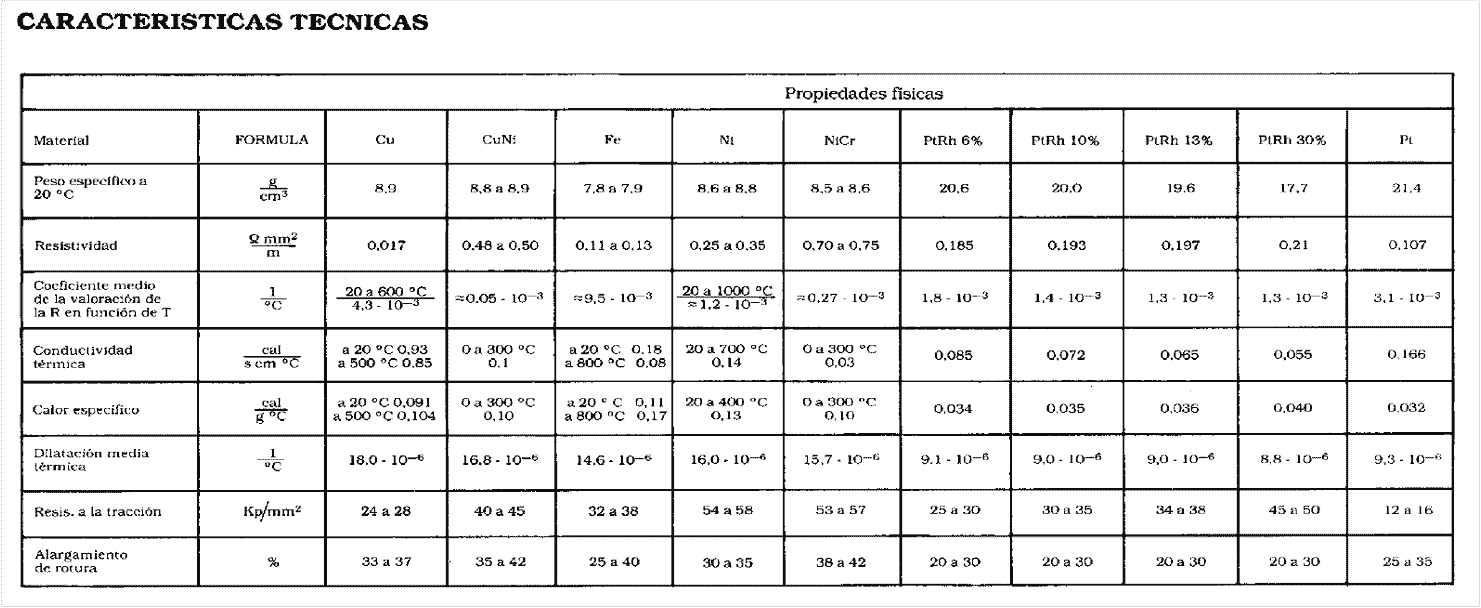
Temperature Technical Characteristics

Temperature Technical Characteristics

1.2. Types of temperature measurements

There are several measurement scales F, C, K, R based on different reference points. In 1887 the IPTS was established, the last revision dates from 1990.

Depending on the measuring principle, continuous temperature measurement can be divided into two types:
Thermocouple

Thermocouple

Thermoresistance (RTD))

Thermoresistance (RTD)

1.2.1. Thermocouples

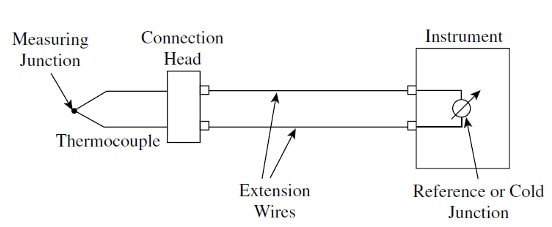
A thermocouple is a device capable of converting heat energy into electrical energy. Its operation is based on the discoveries made by Seebeck in 1821 when he circulated electric current in a circuit formed by two different metals whose joints are kept at different temperatures. This current circulation is due to two combined thermoelectric effects:

Thomas Seebeck

Thomas Seebeck

  • The Peltier effect that causes the release or absorption of heat at the junction of two different metals when a current flows through the junction.
  • The Thompson effect which is the release or absorption of heat when a current flows through a homogeneous metal in which there is a temperature gradient.
Thompson effect

Thompson effect

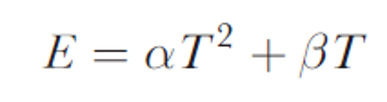
For temperatures below the phase change point the value of alpha is normally small, so the PEF is proportional to the temperature difference.
Thompson effect

Thompson effect

1.2.1.1. Thermocouple types by material

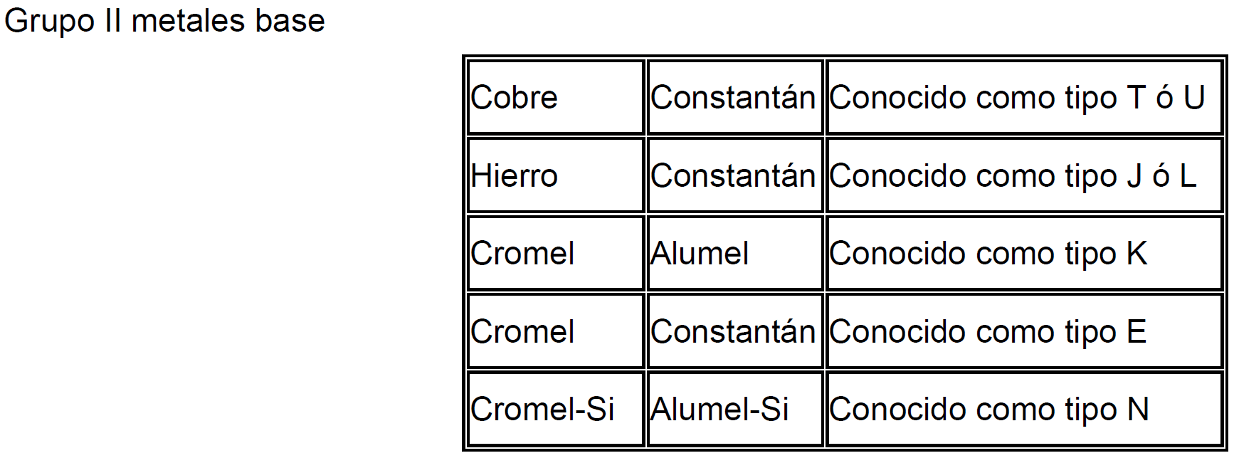
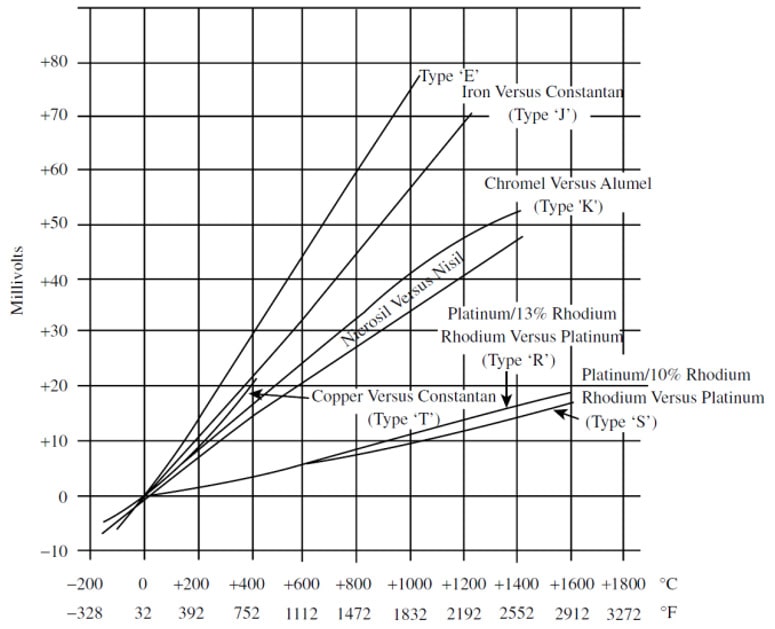
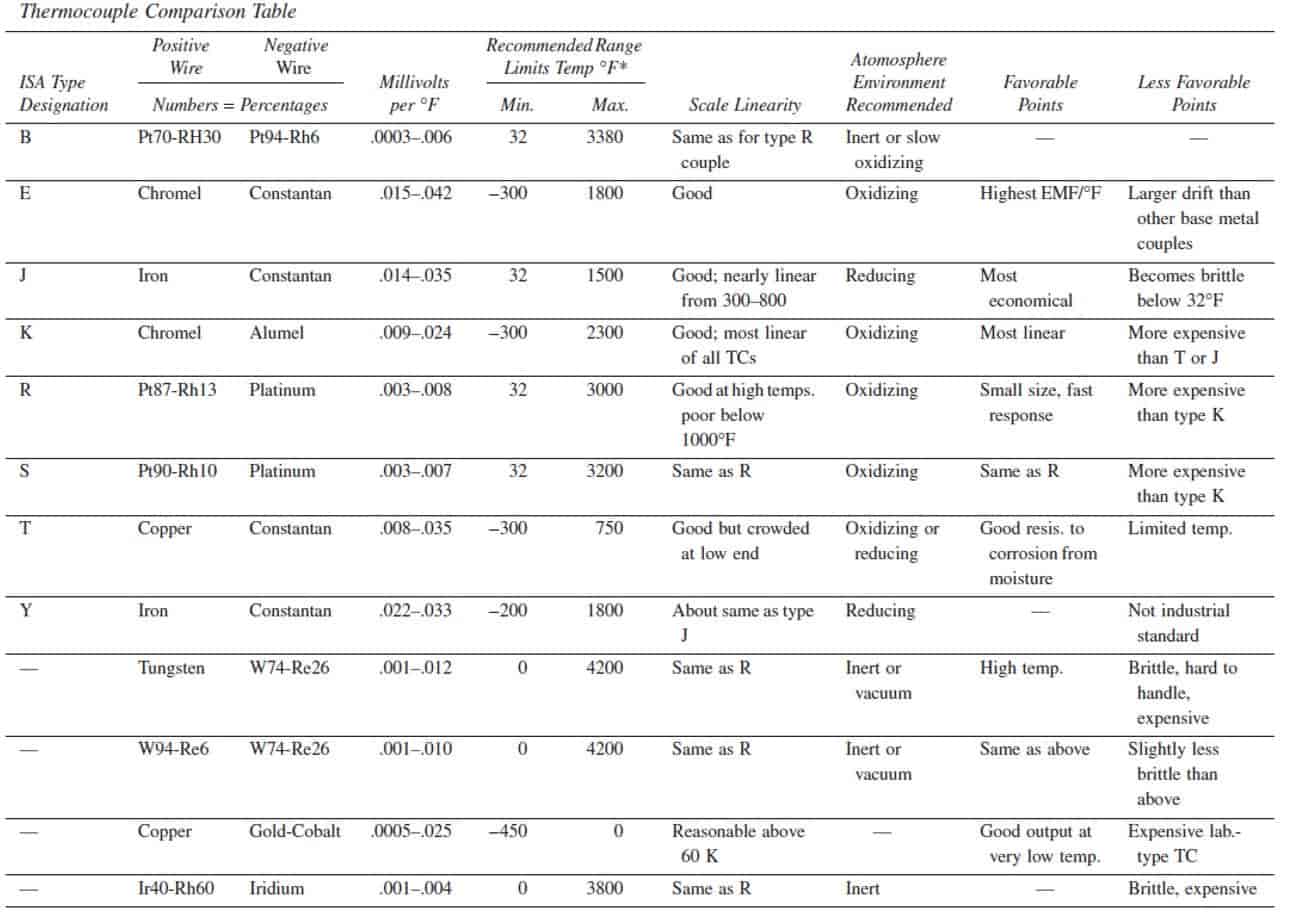
We can consider 8 types of basic thermocouple types T, J, K, E, N, R, S and B (listed in order of temperature). Their chemical composition is different for each of them. There are also other less used types such as Tungsten / Tungsten-Rhenium.

Thermocouple types

Thermocouple types

Thermocouple types

Thermocouple types

Thermocouple types

Thermocouple types

Thermocouples of types R, S and E are used in oxidizing atmospheres and working temperatures up to 1500°C. If the atmosphere is reducing, the thermocouple must be protected with a sealed ceramic tube. The type E thermocouple can be used in vacuum or in an inert or mildly oxidizing or reducing atmosphere. This thermocouple has the highest e.m.f. for temperature variation and can be used to measure temperatures from -200 to +900℃.

The T type thermocouple has a high resistance to corrosion by atmospheric humidity or condensation and can be used in oxidizing or reducing atmospheres. It can measure temperatures from -200 to +260oC.

The type J thermocouple is suitable for atmospheres with little free oxygen. The oxidation of the iron wire increases rapidly above 550℃, and a larger wire diameter is necessary up to a limit temperature of 750oC.

The type K thermocouple is recommended for use in oxidizing atmospheres and at working temperatures between 150 and 500℃. It should not be used in reducing or sulfurous atmospheres unless it is protected with a protection tube.
Thermocouple types

Thermocouple types

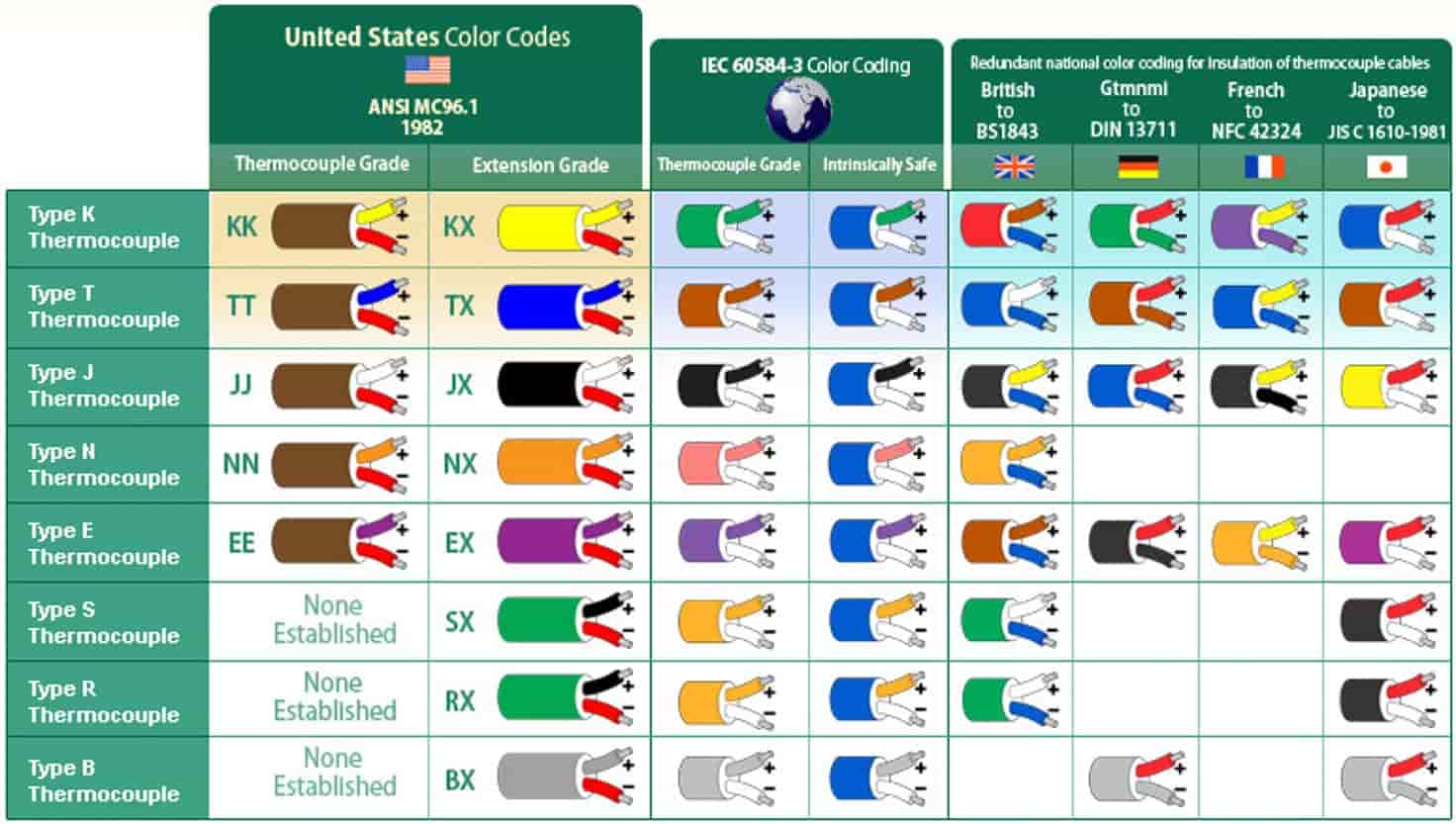
COLOR CODING FOR INSULATION OF THERMOCOUPLE CABLES:
Thermocouple types

Thermocouple types

1.2.1.2. Thermocouple Compensation

When the thermocouple is connected to any measuring instrument, a new VJ2 thermocouple is generated.

The most usual method is the cold junction compensation built into the instrument's amplifier.

The temperature at the joint is measured by a second measuring instrument. The output of this second instrument is used to calculate the voltage required (Vrjc) to counteract the effect of the compensating junction.
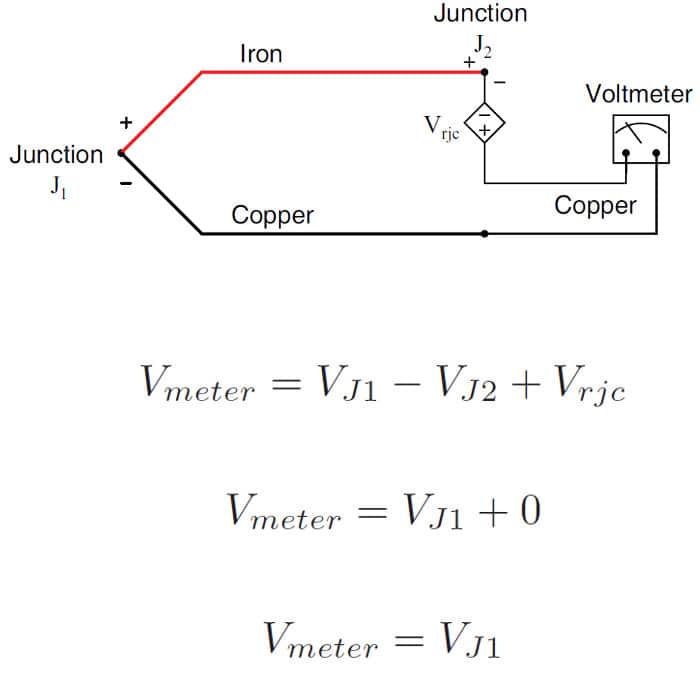
Thermocouple Compensation

Thermocouple Compensation

The connections between the compensation cable, the thermocouple and the instrument must be perfect, without splices in the compensation cable, using the correct wire and the whole installation must avoid the close passage by heat sources (the Thompson effect appears), if these recommendations are not complied with, direct current thermal stresses appear which give rise to a displacement in the calibration of the instrument.

The thermocouple is susceptible to industrial electrical noise because during operation it can generate voltages of 2 to 50 mv and is in an environment where large electrical machines can create hundreds of millivolts in the connecting cable. On the other hand the thermocouple working as an antenna can pick up electromagnetic radiation from radio television and microwaves. Hence it is required that the connecting wires are twisted together and inside a metal sheath which is grounded, that the measuring junction is grounded. In the case of the isolated connection, the assembly must be perfectly shielded and grounded, and the amplifier must have a good signal/noise ratio.

1.2.1.3. Thermocouple Advantages
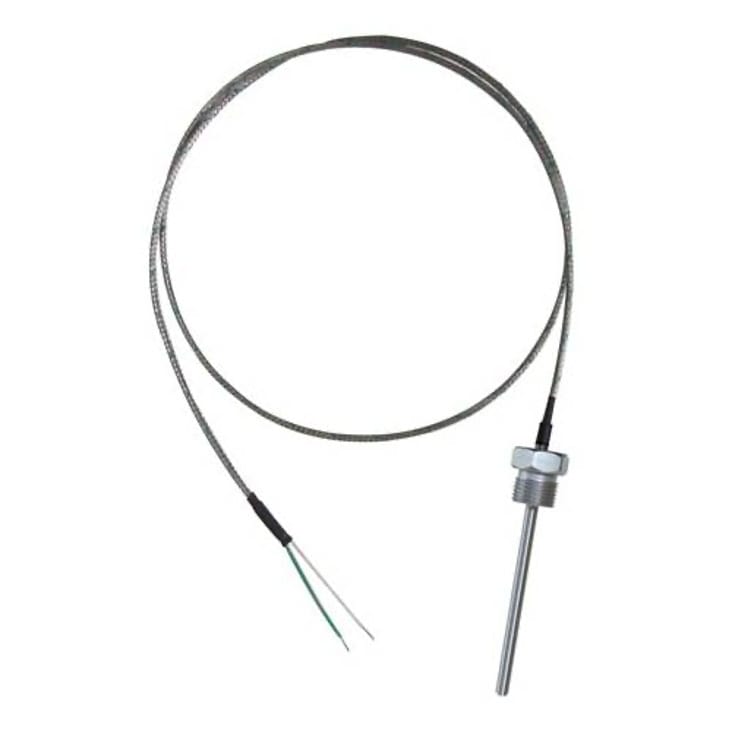
Thermocouple

Thermocouple

  • Low cost
  • Small, they can be welded to a pipe.
  • Used to measure high temperatures.
  • Wide range (-210 to 2338℃) and mechanical resistance.
  • Reasonably stable.
  • Span minimum 25℃ for E, J, K and T types; 200℃ for S and R types.
  • Accuracy: Sum of Thermocouple + Extension cable+transmitter, typically 1 to 2.8℃.
  • Lower time constant than RTDs, fast response.
1.2.1.4. Thermocouple Limitations
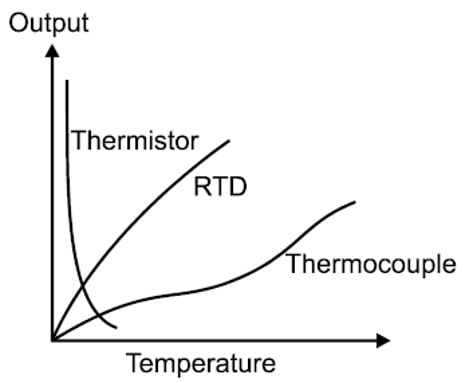
Thermocouple Limitations

Thermocouple Limitations

  • Non-linear elements, requires polynomial conversion through the signal conditioning system.
  • They have low sensitivity (μV/℃) and need the reference temperature.

Thermocouple

Thermocouple

  • The weak signal generated (mV) makes it sensitive to electrical noise and limits its use to limited spans (min 1mV). Small changes in temperature generate small changes in the generated voltage.
  • Calibration may change over time due to changes in composition (oxidation/reduction of metal).
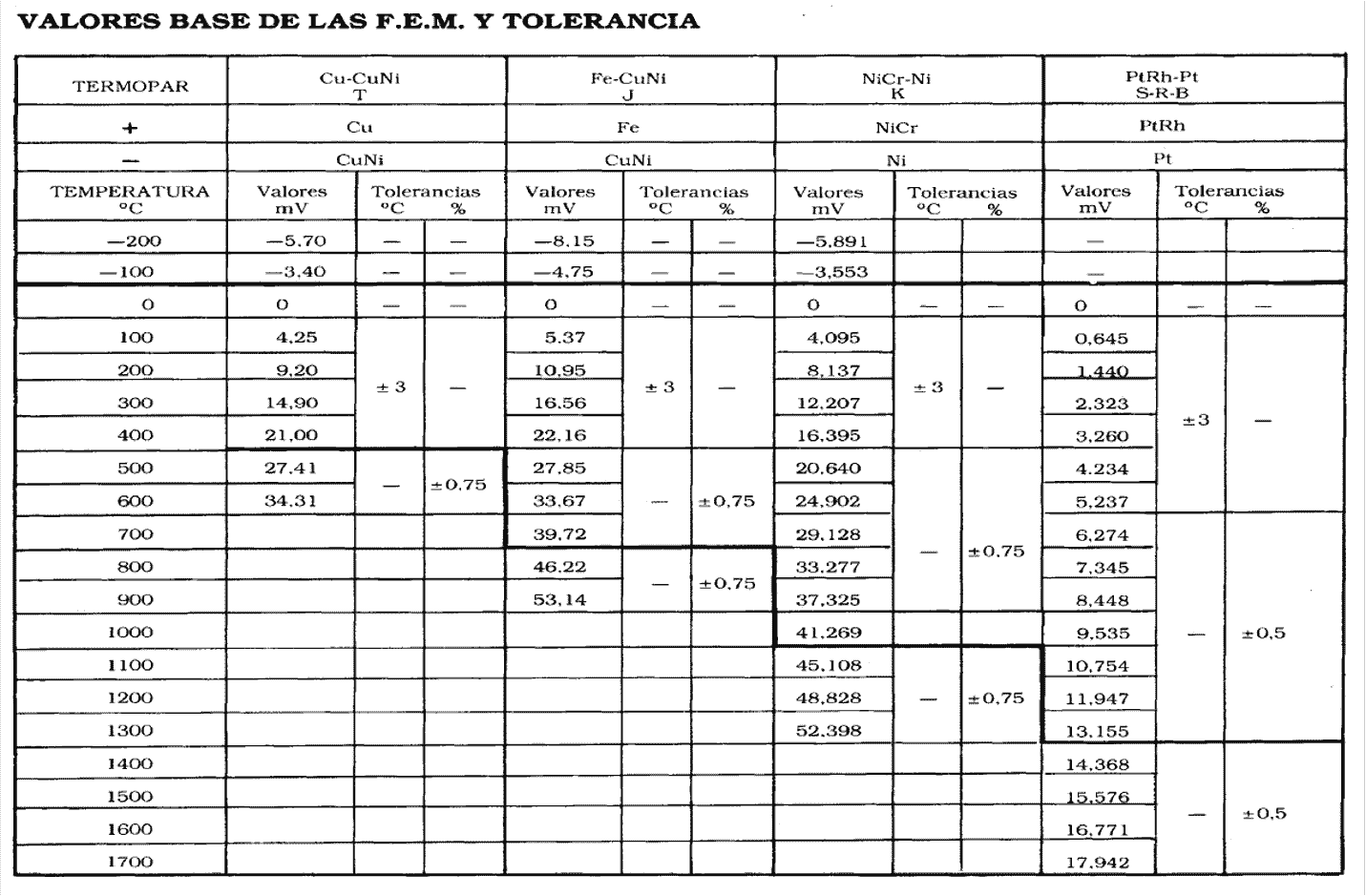
1.2.1.5. Thermocouple Tolerances
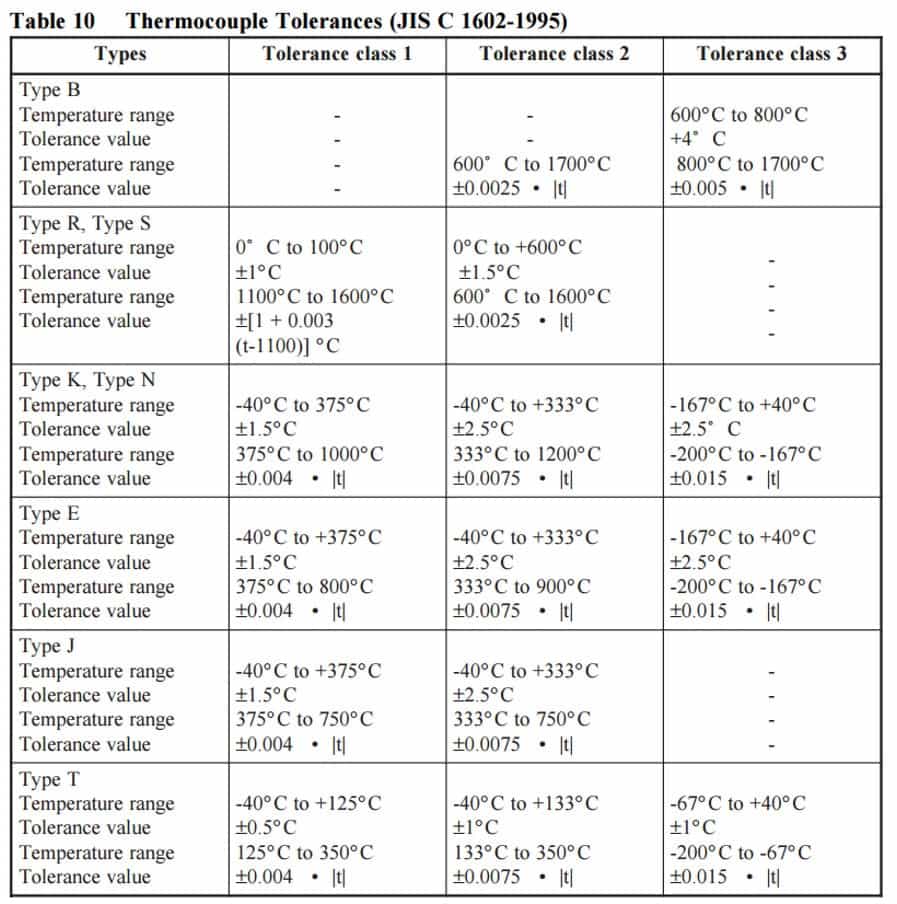
Thermocouple types

Thermocouple types

Thermocouple types

Thermocouple types

1.2.2. Thermoresistances (RTD)

The tendency of electrical conductors to increase their electrical resistance with increasing temperature was first described by Sir William Siemens in 1871.

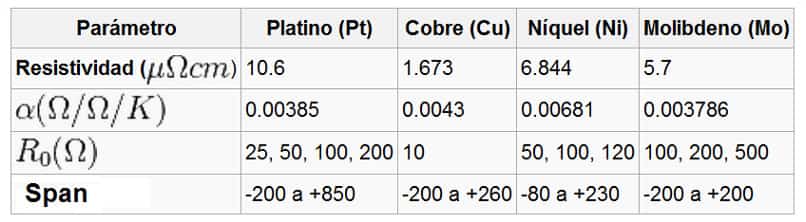
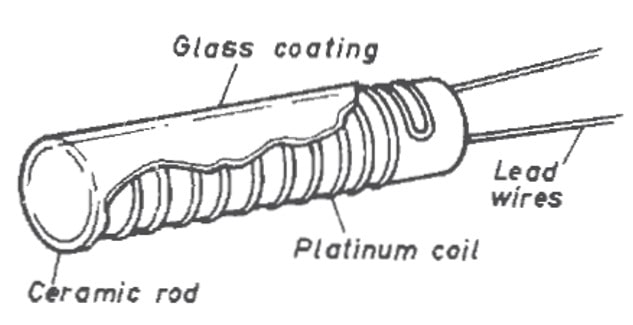
The resistive temperature detector is based on the variation of the resistance of a conductor (Ni, Cu, Pt) with temperature. Platinum is the material with the best performance:

William Siemens

William Siemens

Platinum has a high resistivity, for the same ohmic value, the sensor mass will be lower, so the response will be faster. It has major span and a very linear and low sensitivity.
RTD

RTD

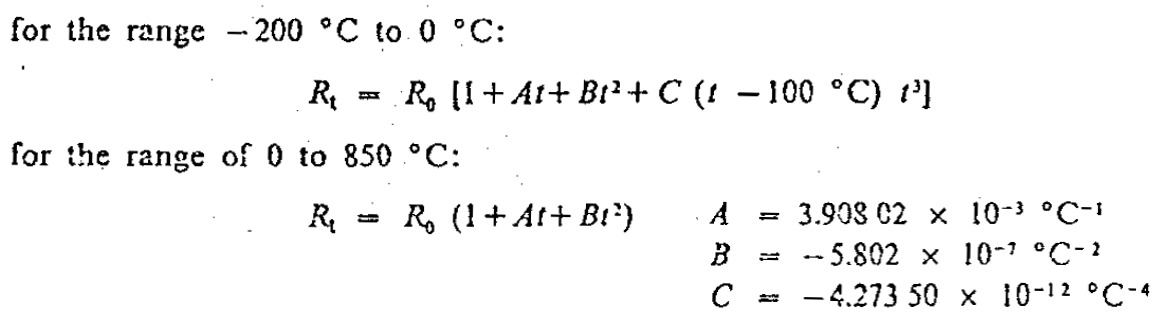
IEC 751 specifies the relationship between temperature and resistance for industrial platinum thermometers. The relationship is defined by the Callendar-van Dusen equation:
Callendar-van Dusen equation

Callendar-van Dusen equation

RTD

RTD

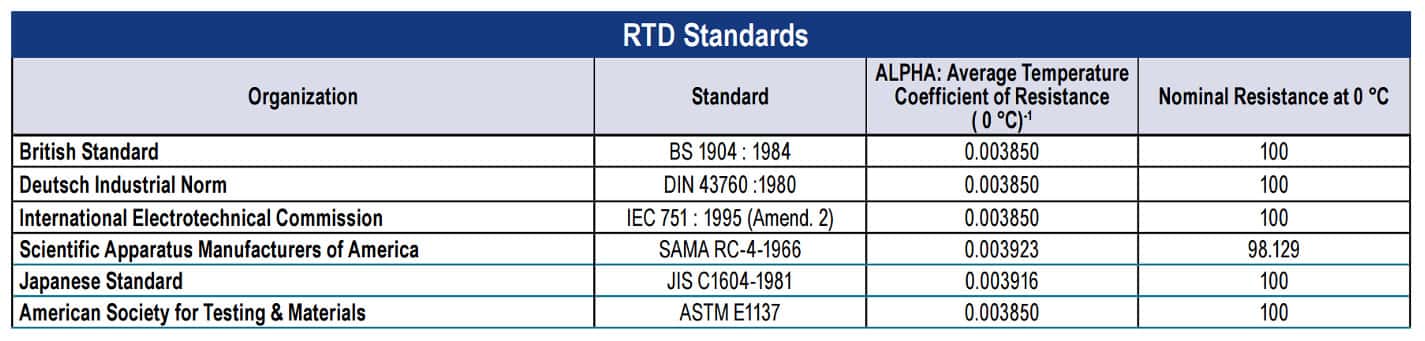
RTD Standards

RTD Standards

1.2.2.1. Thermoresistance Process Connection
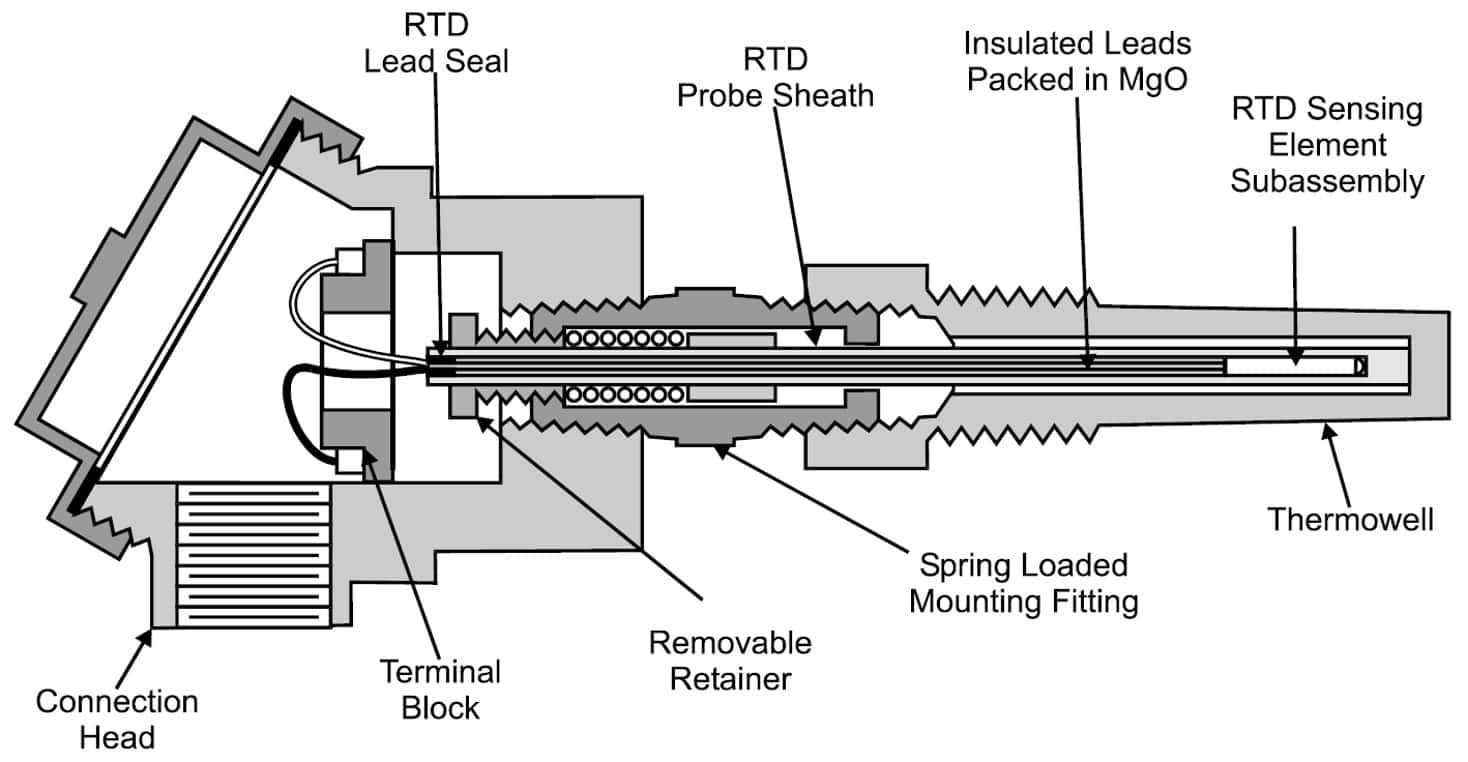
RTD Connection

RTD Connection

There are 3 connection modes for the Pt100 (2 wire connection, 3 wire connection and 4 wire connection), each requiring a different reading instrument:

2 wire connection: The easiest (but least recommended) way is with only 2 wires. The resistance of wires R2 and R3 is inevitably included in the total measured value.
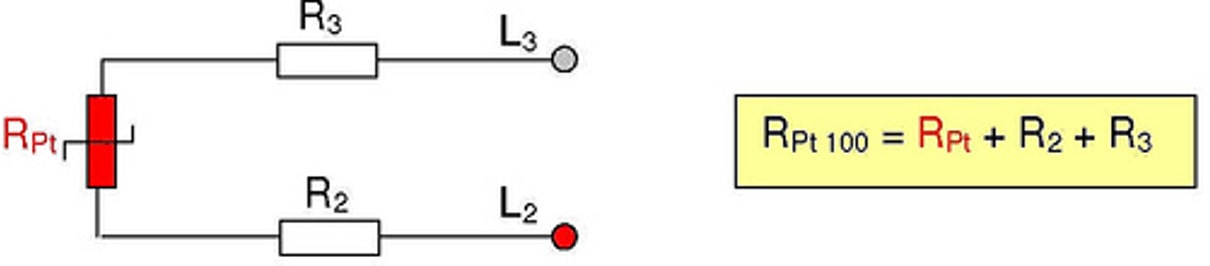
2 Wire Connection

2 Wire Connection

3 wire connection: The most common mode is with 3 wires, it solves the problem of the error generated by the wires quite well. If the resistance of the 3 wires is identical, and only then, the value of the resistance RPt can be measured.
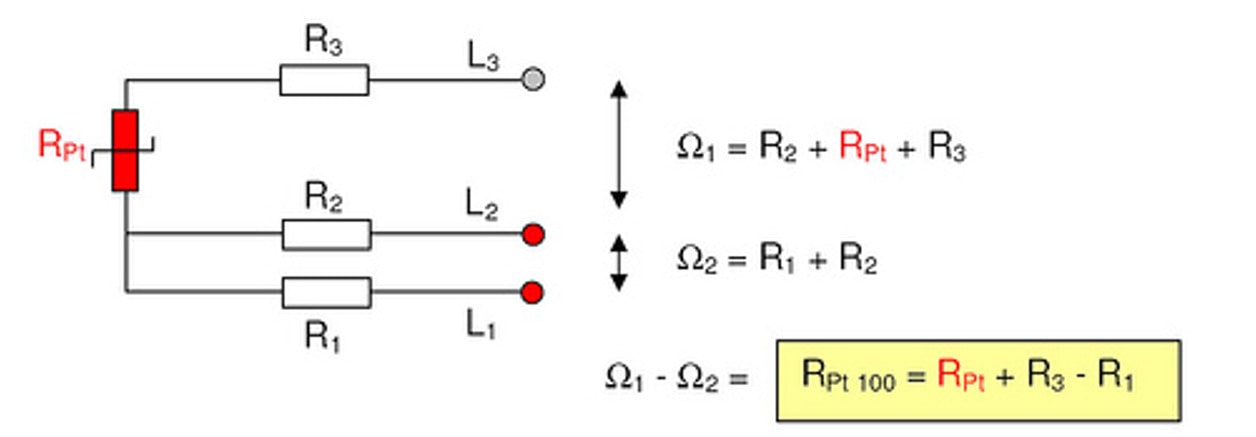
3 Wire Connection

3 Wire Connection

4 wire connection: This is the most accurate way. The transmitter generates a constant current (0.1-1mA) through wires L1 and L4. The Digital Voltmeter has a minimum input impedance of 10 MOhm. The current flowing through the voltmeter (DVM) is very small which means that the voltage drop in resistance of wires R2 and R3 is practically zero.
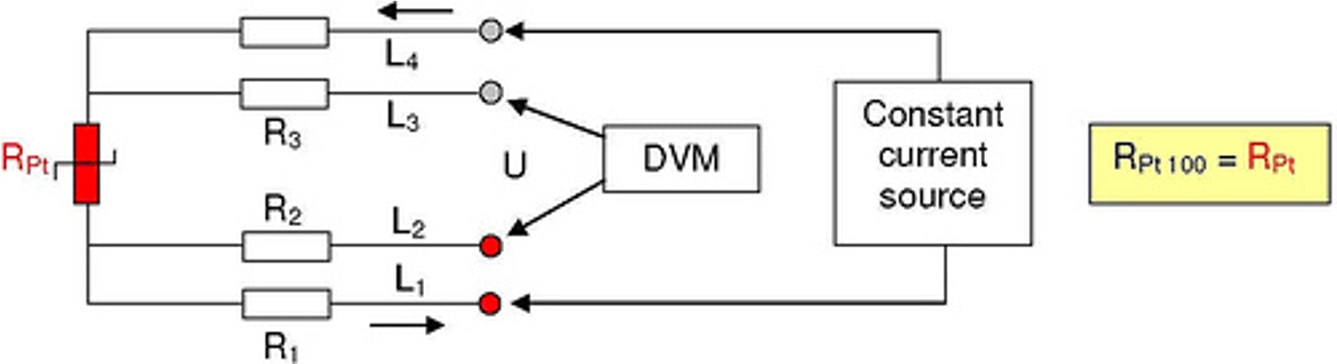
4 Wire Connection

4 Wire Connection

1.2.2.2. Thermoresistance Advantages

Thermoresistance

Thermoresistance

  • Range : from -200℃ to 850℃.
  • Accuracy : A ±0.03℃ B ±0.3℃.
  • Long stability.
  • Good sensitivity.
  • They use standard copper connections.
  • They have higher accuracy, repeatability, stability and sensitivity than CT scans.
  • Depending on the accuracy they can measure hundredths of a degree.
  • High sensitivity 0.1 to 10 Ω / ℃.
1.2.2.3. Thermoresistance Limitations
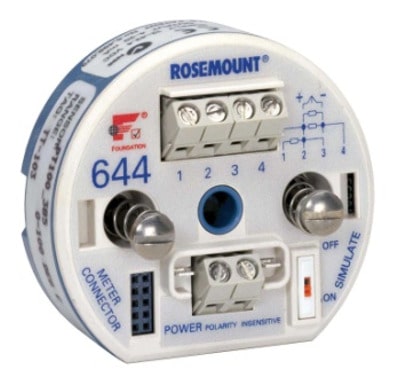
RTD

RTD

  • Self-heating generates a constant error in the measurement.
  • High cost.
  • Larger than a CT scan.
  • Slow response compared to a CT scan.

RTD

RTD

1.2.2.4. Thermoresistance Tolerances

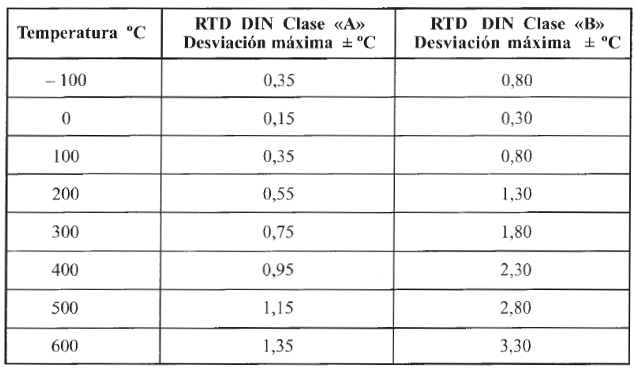
Due to the fact that the resistivity coefficient varies with temperature, the standard defines manufacturing tolerances for probes, generating 2 different classes (A, B).

Class B is normally used for industrial applications, Class A is used for special applications.

It is the only measurement that has an accepted standard defining accuracies and tolerances.
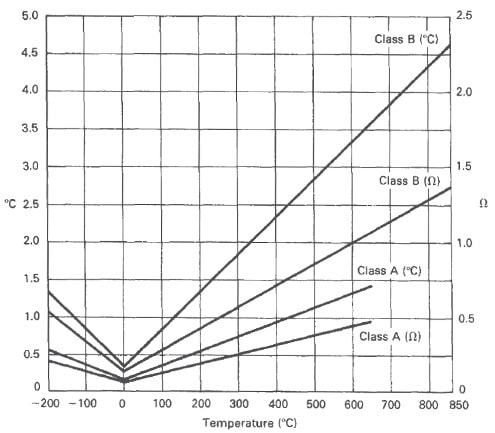
RTD Tolerances

RTD Tolerances

RTD Tolerances

RTD Tolerances

In 1995 IEC 751 establishes 6 tolerance classes:
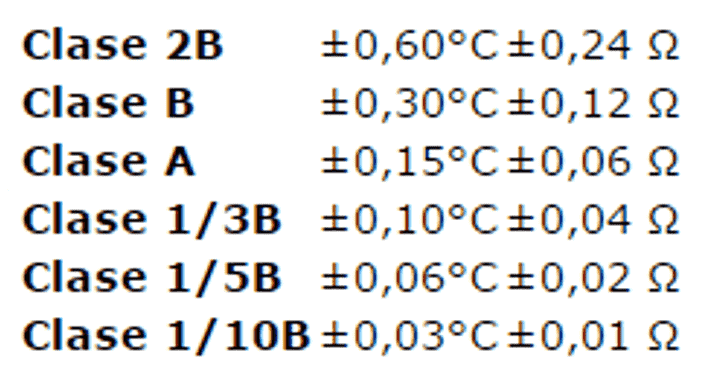
RTD Tolerances

RTD Tolerances

1.3. Temperature Measurement Selection Criteria

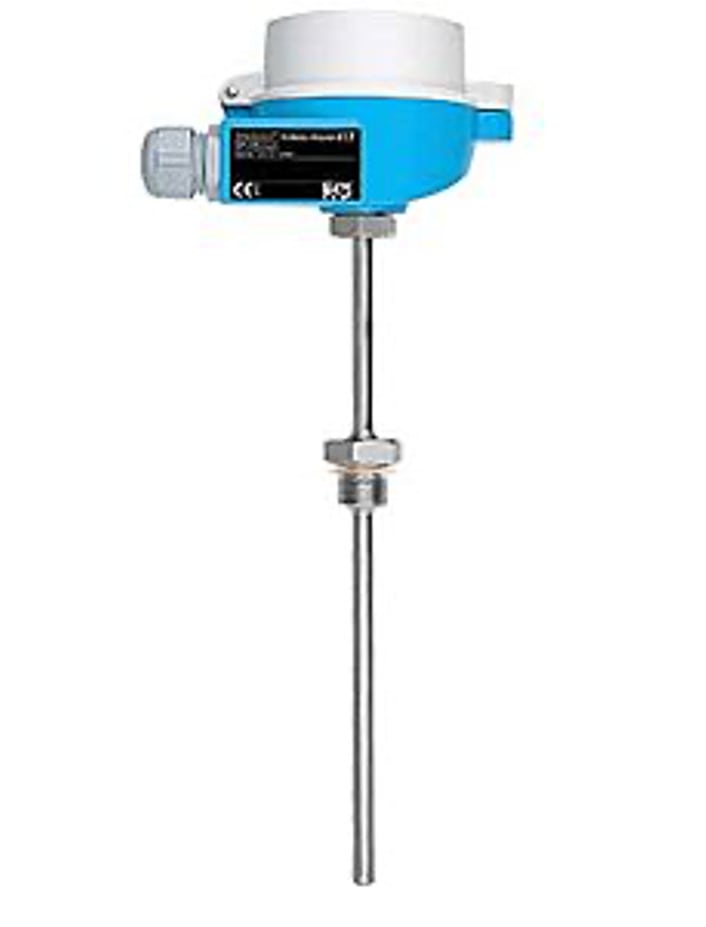
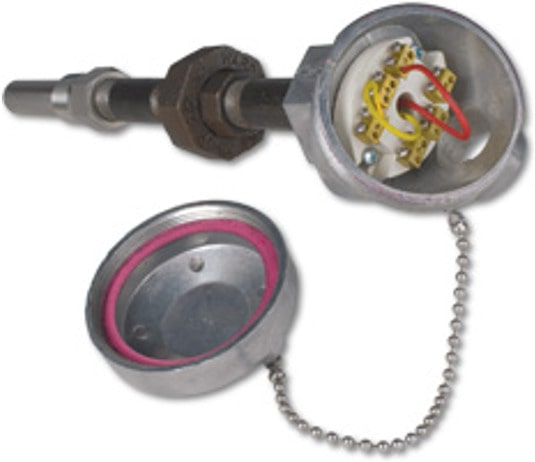
Both in Thermocouple and in RTD the connection to the process requires the installation of additional elements to protect the sensor (thermowell).
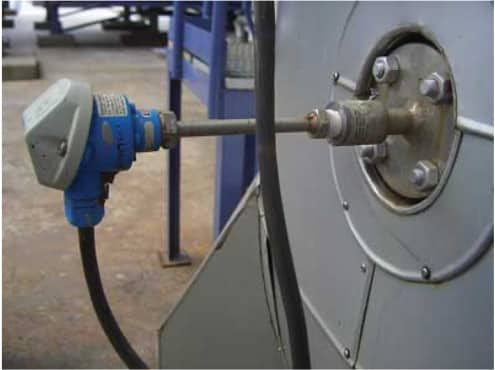
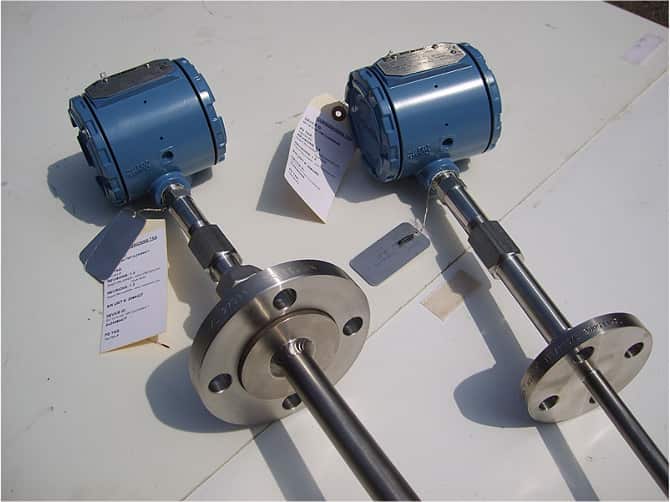
Thermowell

Thermowell

Thermowell

Thermowell

Thermowell

Thermowell

Temperature Measurement Selection Criteria

Temperature Measurement Selection Criteria

The installation of the thermowell has not been taken into account, which usually means in most cases a tripling of the measurement value (approx.).

1.4. Suppliers List

  • ABB (www.abb.com)
  • Foxboro/Invensys (www.foxboro.com/temp)
  • Honeywell (www.iac.honeywell.com/ichome)
  • Hukseflux (www.hukseflux.com)
  • Kamstrup (www.kamstrup-process.com)
  • Mathis Instruments Ltd. (www.mathis.unb.ca)
  • Moore Industries-International Inc. (www.miinet.com/products/ca_temperature.shtml)
  • Rosemount/Emerson (www.rosemount.com/products/temperature/)
  • Siemens (www.sea.siemens.com)
  • Yokogawa (www.yokogawa.com)

Download our free PDF file about this article!

  • Instrumentation and Control.net
  • Rating: 4.5854 - 82 reviews
We have prepared this complete PDF so that you have all the information we give in this article and you can share it, discuss it with your colleagues, and use it professionally. Having the content in PDF format allows you to access it offline, print it easily, and keep it well-organized for future reference.
We consider that it is better to have a well-formatted text that includes all the key concepts explained in this publication, ready to share or save for later use. A PDF ensures that the layout remains intact across different devices and makes it easier to annotate or highlight important points.

Information and Definitions


Accuracy

Accuracy in industrial temperature measurement refers to how closely a sensor’s reading matches the true temperature of the measured environment. It is crucial for ensuring product quality, safety, and regulatory compliance in industrial processes. High accuracy minimizes deviations and supports better control over heating or cooling systems. Factors affecting accuracy include sensor calibration, environmental conditions, and instrumentation quality. Maintaining accuracy requires routine validation and recalibration of measurement equipment, especially in industries like pharmaceuticals, food processing, and chemical manufacturing where precise thermal control is critical to outcomes.

Calibration

Calibration is the process of comparing a temperature measurement device with a known standard to detect and correct deviations. In industrial settings, calibration ensures that sensors and instruments provide consistent and accurate readings over time. It is essential for meeting industry standards, improving process control, and reducing measurement errors. Regular calibration reduces the risk of faulty data, which can lead to process inefficiencies or safety hazards. Typically performed using fixed-point or comparison methods, calibration must be documented and traceable to international standards for quality assurance.

Cold Junction Compensation

Cold junction compensation is a technique used in thermocouple measurements to account for the temperature at the connection between the thermocouple and the measuring instrument. Since thermocouples measure temperature differences, this reference point must be accurately measured and corrected for to obtain a true temperature reading. In industrial applications, built-in cold junction sensors in measurement devices automate this correction, ensuring more precise results. Without compensation, temperature readings could be significantly incorrect, leading to process errors and potential damage to equipment or products.

Infrared Thermometry

Infrared thermometry is a non-contact method of measuring temperature based on the infrared radiation emitted by an object. It is widely used in industrial environments where direct contact with the target is impractical or unsafe, such as with moving parts, high-voltage equipment, or extreme temperatures. Infrared thermometers provide rapid readings and are useful for monitoring surface temperatures, detecting hotspots, and ensuring consistent thermal profiles. However, their accuracy depends on factors like emissivity, distance, and ambient conditions, requiring careful configuration for reliable use in industrial applications.

Precision

Precision in industrial temperature measurement refers to the repeatability or consistency of measurements taken under the same conditions. Unlike accuracy, which relates to closeness to the true value, precision indicates how reliably an instrument can reproduce the same reading. High precision is vital for monitoring trends, detecting small changes, and maintaining control in critical industrial processes. It helps in ensuring that temperature-related decisions are based on stable data. Precision can be affected by sensor quality, environmental noise, and the resolution of the measurement system.

RTD (Resistance Temperature Detector)

An RTD is a temperature sensor that measures temperature by correlating the resistance of a metal, typically platinum, with temperature changes. RTDs are known for their high accuracy, repeatability, and stability over a wide temperature range, making them suitable for many industrial applications. They are particularly effective in processes requiring precise temperature control, such as semiconductor fabrication or chemical production. Though more expensive and slower to respond than thermocouples, RTDs provide better performance in controlled environments where long-term reliability is critical.

Temperature Controller

A temperature controller is an electronic device used in industrial systems to maintain a desired temperature by comparing actual readings with a set point and activating heating or cooling mechanisms accordingly. It is an essential component in automated processes that require consistent thermal conditions, such as plastic molding, food processing, or kiln operations. Controllers can range from simple on-off types to sophisticated proportional-integral-derivative (PID) systems that provide precise and stable control. Proper tuning of a temperature controller is key to achieving optimal system performance and efficiency.

Temperature Sensor

A temperature sensor is a device that detects and converts thermal energy into a readable signal for monitoring and control purposes in industrial systems. Common types include thermocouples, RTDs, and thermistors, each suitable for specific applications and temperature ranges. Sensors are integral to process automation, safety systems, and quality control. Their performance depends on factors such as placement, response time, range, and environmental compatibility. Selecting the appropriate sensor type ensures reliable operation and data integrity in diverse industrial settings, from furnaces to refrigeration units.

Thermistor

A thermistor is a temperature-sensitive resistor whose resistance changes significantly with temperature, used primarily for precise, narrow-range temperature measurements. In industrial applications, thermistors offer fast response and high sensitivity, making them ideal for monitoring localized thermal conditions in electronics, HVAC systems, and laboratory instruments. They are cost-effective but less suitable for high-temperature or wide-range measurements compared to RTDs and thermocouples. Their non-linear response requires specialized circuitry for accurate readings, but when used correctly, thermistors can provide excellent precision in temperature control tasks.

Thermocouple

A thermocouple is a widely used temperature sensor consisting of two different metals joined at one end, generating a voltage proportional to temperature differences. Due to their wide temperature range, ruggedness, and quick response, thermocouples are ideal for harsh industrial environments such as furnaces, engines, or chemical reactors. They are relatively inexpensive and easy to install but require careful calibration and compensation to ensure accuracy. Thermocouples are especially valuable in processes where extreme or fluctuating temperatures must be continuously monitored and controlled.

Temperature Measurement References


1 ITS-90 (International Temperature Scale of 1990) — Basis for high-accuracy temperature measurements and calibrations.

2 ASTM E230/E230M - Standard Specification and Temperature-Electromotive Force (EMF) Tables for Standardized Thermocouples.

3 IEC 60751 - Industrial platinum resistance thermometers and platinum temperature sensors.

4 ASTM E2877 - Standard Guide for Digital Contact Thermometers.

5 NIST SRD 60 - ITS-90 Thermocouple Database — Reference EMF tables and uncertainties.

6 Beamex Temperature Calibration Handbook (2012) — Practical calibration procedures for RTDs and thermocouples.

7 Omega Temperature Measurement Handbook (latest edition) — Application notes on sensor selection, wiring, and error sources.

8 Lipták, B. (2003) Instrument Engineers' Handbook: Process Measurement and Analysis — Temperature measurement chapters.

9 Bentley, J. P. (2005) Principles of Measurement Systems — Thermometry fundamentals and sensor dynamics.

10 API MPMS Chapter 7 - Temperature Determination — Guidance for temperature measurement in petroleum applications.

Another calculators or articles that may interest you ...


1 P&ID Diagram Basics 2 - International Standards - Learn standard P&ID symbols and conventions.

2 P&ID Diagram Basics 3 - Functional Identification - Understand functional numbering in diagrams.

3 Introduction to Hazop Analysis - Master HAZOP methodology for safety analysis.

4 Pressure Measurement - Pressure sensing techniques and instrumentation.

5 Molecular Weight of Common Gases - Gas property reference tables and data.

6 Orifice Plate Calculator - Size - Determine correct orifice dimensions.

7 Flow Rate Calculator - Calculate volumetric and mass flow rates.

8 Pressure Temperature Compensation Formula - Understand thermal effects on measurements.

Frequently Asked Questions


Q1 What are contact and non-contact temperature measurement methods?

A1 Contact and non-contact methods are two primary approaches to industrial temperature measurement. Contact methods involve direct physical contact with the object, using devices like thermocouples or resistance temperature detectors (RTDs). They are ideal for solid or liquid surfaces and offer accurate readings in stable environments. Non-contact methods, such as infrared thermometers or thermal cameras, detect emitted thermal radiation from a distance. These are useful in applications where contact is impractical or dangerous, such as measuring moving parts or very high-temperature objects like molten metals or furnaces.

Q2 What are resistance temperature detectors (RTDs)?

A2 Resistance temperature detectors, or RTDs, are temperature sensors that operate based on the principle that a metal's electrical resistance changes with temperature. Typically made from pure platinum, RTDs provide highly accurate and repeatable measurements, making them suitable for precise industrial applications. They are commonly used in laboratory settings, process industries, and HVAC systems. RTDs offer better stability and a wider linear range than thermocouples but are generally more expensive and have slower response times. Their performance makes them ideal for applications where accuracy and long-term reliability are critical.

Q3 What are thermistors?

A3 Thermistors are temperature-sensitive resistors that change resistance significantly with small temperature changes. Made from ceramic materials, they are highly sensitive and typically used in applications requiring precise temperature control, such as electronics, HVAC, or battery management systems. There are two types: Negative Temperature Coefficient (NTC), where resistance decreases as temperature increases, and Positive Temperature Coefficient (PTC), where resistance increases with temperature. While thermistors provide excellent accuracy over a limited range, their nonlinear behavior and lower temperature tolerance make them less suitable for high-temperature industrial environments compared to RTDs or thermocouples.

Q4 What are thermocouples?

A4 Thermocouples are temperature sensors made from two dissimilar metal wires joined at one end, which produce a voltage proportional to temperature differences. Widely used in industrial settings due to their robustness, wide temperature range, and fast response time, thermocouples can function in extreme environments like furnaces, engines, and chemical plants. They come in various types (such as Type K, J, or T), each suitable for different temperature ranges and conditions. Although less accurate than RTDs, thermocouples are cost-effective, durable, and versatile, making them essential for many industrial temperature monitoring tasks.

Q5 What is a bimetallic thermometer?

A5 A bimetallic thermometer is a mechanical temperature measurement device that uses two bonded metal strips with different thermal expansion coefficients. As temperature changes, the metals expand or contract at different rates, causing the strip to bend or coil, which moves a needle on a dial to indicate the temperature. These thermometers are commonly used in HVAC systems, ovens, and industrial processes where ruggedness and simplicity are valued over high accuracy. They require no external power, are relatively low-cost, and offer durable operation, especially in environments where electronic sensors might fail.

Q6 What is emissivity in infrared temperature measurement?

A6 Emissivity is a measure of a material's ability to emit thermal radiation compared to a perfect blackbody at the same temperature. In infrared temperature measurement, accurate emissivity settings are essential because they directly affect the sensor's reading. Materials with low emissivity may appear cooler than they actually are, leading to significant errors unless corrected. Industrial infrared sensors often allow emissivity adjustments to compensate for different surface properties. Understanding and correctly setting emissivity is crucial in applications such as metallurgy, glass manufacturing, and electrical inspection, where precise non-contact temperature readings are necessary.

Q7 What is industrial temperature calibration?

A7 Industrial temperature calibration is the process of verifying and adjusting temperature measurement instruments to ensure accuracy and compliance with standards. This involves comparing the readings of a device, such as a thermocouple or RTD, against a known reference under controlled conditions. Calibration helps detect drift, degradation, or errors over time, which is critical in industries like pharmaceuticals, food processing, or aerospace, where temperature precision affects quality and safety. Regular calibration enhances confidence in measurement data, supports regulatory compliance, and helps maintain optimal performance of temperature monitoring systems.

Q8 What is infrared thermography?

A8 Infrared thermography is a non-contact technique that uses infrared cameras to capture thermal images representing temperature distribution across a surface. It is widely used in industrial applications such as electrical inspections, mechanical diagnostics, and building energy audits. By detecting emitted infrared radiation, thermography can identify overheating components, insulation defects, or process irregularities without physical contact or process interruption. This method enhances preventive maintenance and improves safety by enabling early fault detection. Infrared thermography is especially useful in dynamic or high-temperature environments where traditional sensors are unsuitable.

Q9 What is temperature compensation in industrial sensors?

A9 Temperature compensation is a technique used to correct or adjust sensor outputs affected by changes in ambient or operational temperatures. In industrial settings, sensors may drift or produce inaccurate readings if temperature variations influence their electronic components or materials. Compensation ensures that measurements remain consistent and reliable despite environmental changes. It is especially important in precision applications, such as process control, where even slight deviations can affect product quality or system efficiency. Temperature compensation can be implemented through sensor design, electronic circuitry, or software algorithms.

Q10 What is the Seebeck effect in thermocouples?

A10 The Seebeck effect is the fundamental principle behind thermocouples, describing the phenomenon where a voltage is generated at the junction of two different metals when there is a temperature difference between that junction and the other ends of the metals. This voltage can be measured and related to temperature, enabling thermocouples to function as sensors. The magnitude of the voltage depends on the metals used and the temperature gradient. The Seebeck effect allows thermocouples to provide a simple, rugged, and self-powered means of measuring temperature in a wide variety of industrial environments.